Great Horned Owl

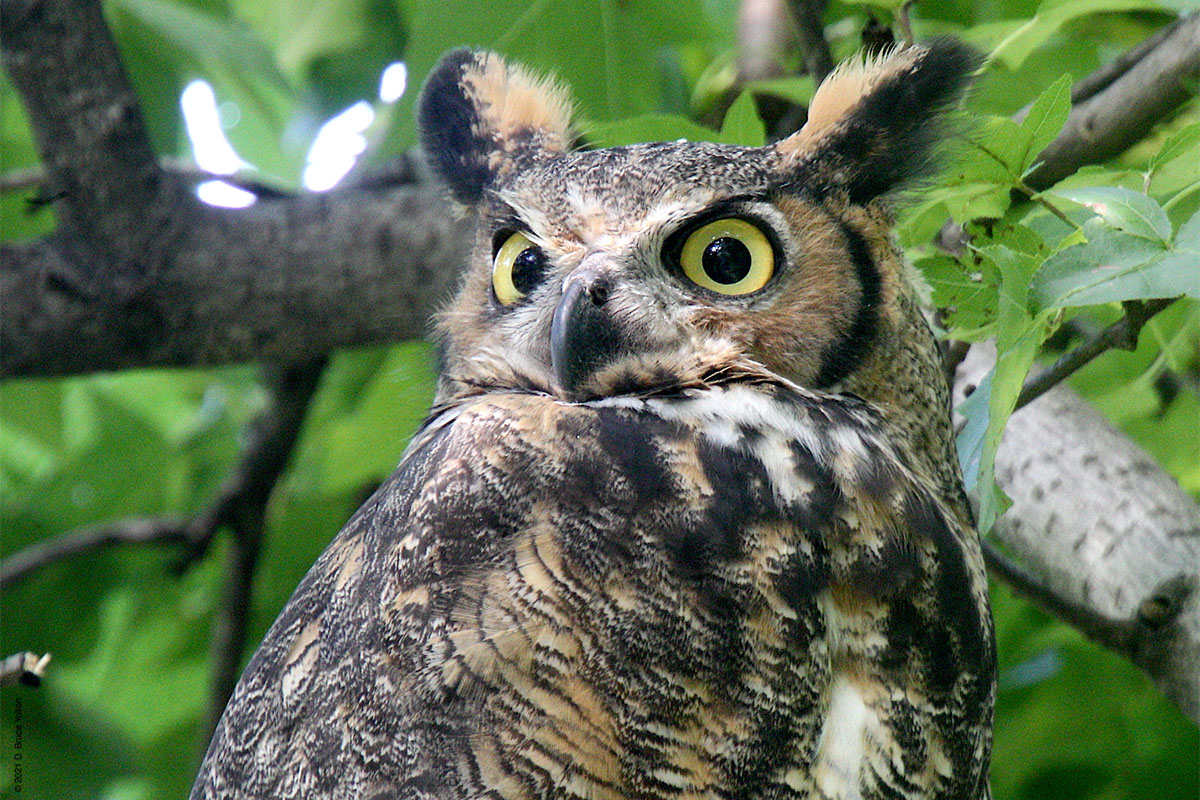
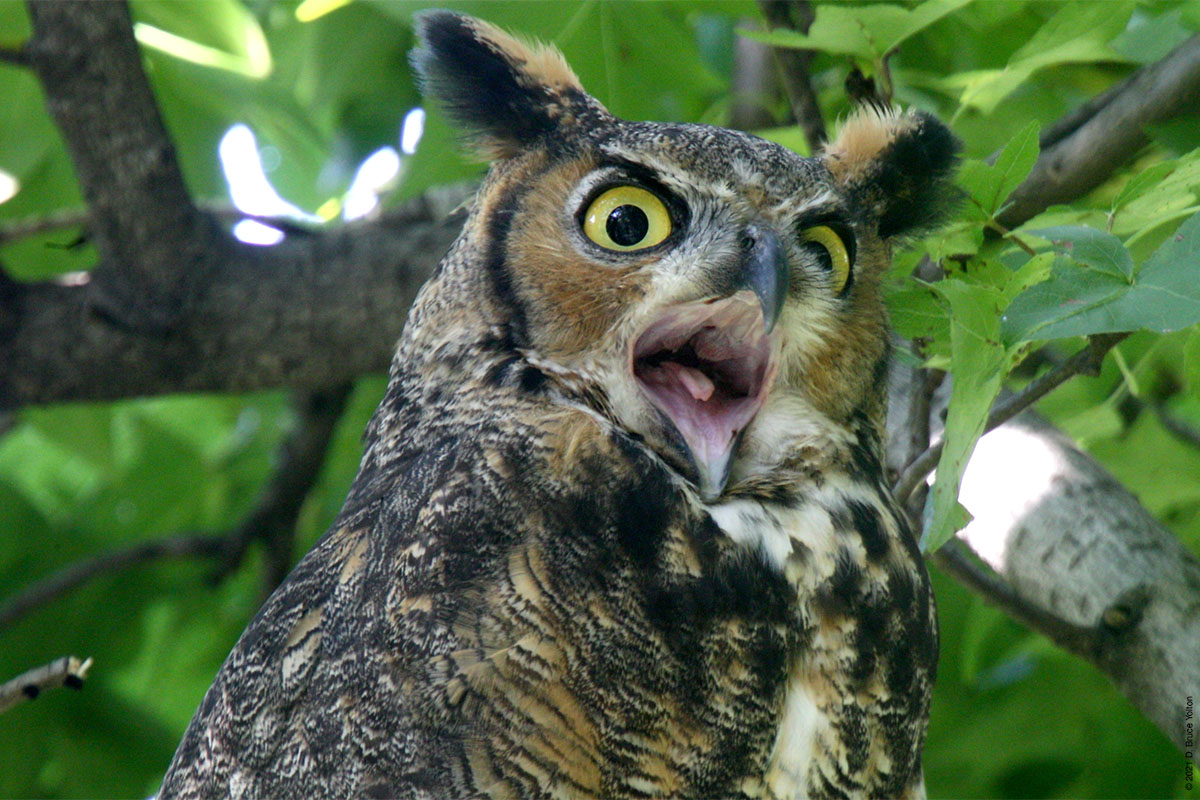
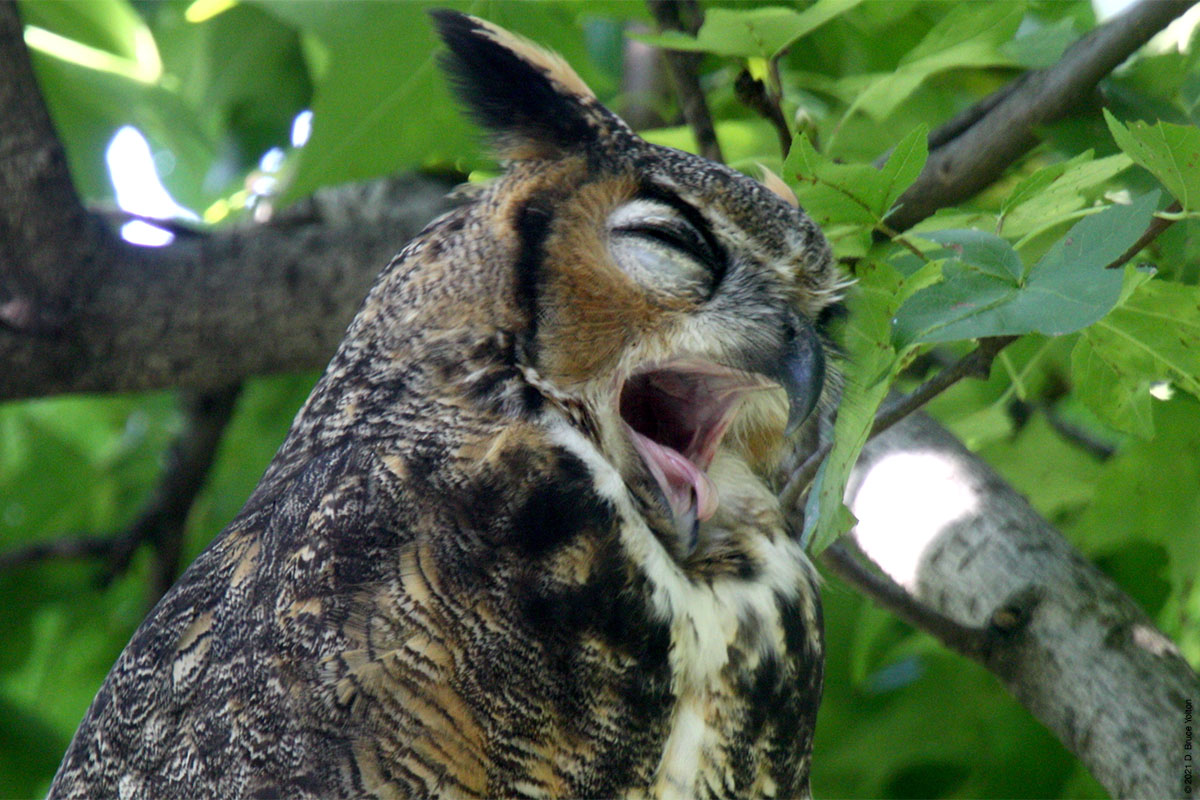
Central Park had a Great Horned Owl over the weekend. While it got publicity on Twitter, the birders that came to watch it were very respectful. It was very nice to see that some of the photographers and folks who had watched the Snowy and Barred Owls, sent out reminder tweets not to use flash and to be quiet during the day while the owl slept. I was happy to see the Central Park owl watching community get ahead of possible problems.

The Great Horned Owl roosted in a much lower spot than we’re used to seeing visiting Great Horned Owls, so it gave everyone who saw it great looks. It moved branches once during the day.

It was found by both Blue Jays and American Crows, who came back repeatedly to harass it. Plus the endless flyovers of helicopters didn’t help it get uninterrupted sleep.

Ode to a Barred Owl

The Barred Owl that died early Friday morning, due to an accidental collision with a park vehicle will be greatly missed by those who observed her. For ten months, she gave us many insights into her species’ behavior and we learned her individual habits. While we didn’t experience her raising young or finding a mate, we did get to see her hunt, bathe, manage territorial disputes with hawks, jays, robins and titmice and hear her wonderful calls. In the middle of a pandemic, she brought us so much joy. I’m going to miss her greatly.

When she arrived in the North Woods, in October of 2020 she was very active that the first week during the daytime. The first day I saw her, she had to deal with a Cooper’s Hawk and later in the day quickly caught a Northern Cardinal and ate it in what seemed to be a few gulps.

To my amazement, she stuck around in November, even with the hysteria created by The New York Times article about her, which led to hundreds of people camping out under her roosts and her being harassed by playback. She weathered it well, however.

By late December, the Barred Owl had found a Hemlock to roost in just west of the Lobe Boathouse. She would roost here for months. As she settled in, we enjoyed watching her stretch just before fly out, tussle with the local hawks and crows, and make wonderful “Who cooks for you? Who cooks for you-all?” calls. After fly out, many times on bitterly cold nights, she would concentrate on finding a meal before giving those who were watching her the slip.

Some nights, she would hunt near the Hemlock. While she slept most of the day, she was also keeping track of the potential meals around her. She kept track of the tree cavities around the nest, and would go after the birds and squirrels she had seen go to roost at dusk. There must have been at least 20 she kept track of. If she didn’t get something near the roost, she generally went to one of three Brown Rat colonies in the Ramble were park patrons overfeed birds.

For a few weeks, she keep track of the juvenile Cooper’s Hawks and Red-tailed Hawks that harassed her during the day, and would harass them at their roosts. It was great fun to see her give them payback. And on one night, she led us to a Eastern Cottontail rabbit in Charles’ Garden, who after watching it for about ten minutes, decided to leave it alone. I think it was too big a meal!

Over the months she was in the park, we would learn more and more about her habits. After she woke up and got a meal, she would explore large areas of the park. Sometimes, she would roost in the North Woods for a few days or a single night before returning to Ramble. She even showed up on the North Meadow on one of the same evening as the Snowy Owl. She kept us on toes too. When we thought we understood her habits, she would mix it up.

In the spring, after the trees leafed out, she stopped using the Hemlock. But she stayed in the Ramble.  Luckily, American Robins and Blue Jays would find her roost, and led humans to her.

As it got warmer, we learned how much she liked water. Taking baths in the stream that flows from the Azalea Pond to the Oven or the Gill, hunting along the bank of the Gill, or going further away to the Model Boat Pond or Hernshead on The Lake. On the Lake, she got into a few “arguments” with two Black-crowned Night-Herons.

I feel so blessed to have been able to spend time with her. Whenever I hear or see a Barred Owl in the future, I’m sure I will be reminded of the wonderful times I had for ten months with this special bird.

R.I.P. Barred Owl

The Barred Owl that had stayed in Central Park for about ten months, was hit by a Central Park Conservancy vehicle early on Friday. The owl died.

Sadly individuals like Bob DeCandido and David Barrett, have exploited the owl’s death for yet more self-promotion in the media, including The New York Times. It was shameful to see, in what was basically an obituary for this owl, “Birding Bob” promoting unnecessary use of playback, and his owl tours. So much for respecting the memory of this owl.

Individuals on social media have been quick to blame the Conservancy and the Park’s Department for the wrong reasons. Folks have criticized the Conservancy for having a vehicle driving slowly at a late hour. This is not unusual for the park, and after-hours maintenance happens on a regular basis. Unfortunately, owls which have very limited peripheral vision, get into vehicle accidents often. This clearly was an accident.

The Barred Owl stayed in Central Park because of the abundant supply of rodents available in the Ramble, rather than migrating to safer, more rural location. It favored three areas after fly out, each overrun by Brown Rats due to excessive feeding of birds, raccoons and squirrels, which has resulted in rat colonies north the “oven” on the Lake, at Timothy Laupot Bridge and near the Humming Tombstone.

Sadly, social media has promoted the indiscriminate feeding of birds and animals, which kept this owl from migrating naturally to a safer, rural location. This is what we should be angry about. By not respecting the boundary between man and wildlife, this owl was killed by the irresponsible individuals who created a Brown Rat infestation in the Ramble and the Loch.

The Central Park Conservancy had implemented great rodent control programs in the Ramble and the North Woods, only to have these programs upended by the careless and unneeded feeding of wildlife.

So, if you want to be angry, get angry at the folks who have created this rodent infestation. And it’s not just the folks doing the feeding.

Mitchell Silver, the former Park’s Commissioner who was too much of a coward to go against public opinion and adopt the proposed regulations limiting the feeding of wildlife in city parks. He went against his own staff in the Wildlife Unit and the Urban Park Rangers units of the Park’s department, which left these units without any leverage to stop this indiscriminate feeding of wildlife in the Central Park.

Or David Barrett who promote the hand feeding of birds in the Ramble and the Loch, which have converted both from natural areas into petting zoos.

Late July, Early August

I’ve been birding on and off in the last two weeks, usually without a camera. It’s a quiet time with the first signs of fall migration just beginning. (I had two American Redstarts and a Northern Waterthrush yesterday.)

I have shot some snippets of what I’ve been seeing including:

  • Central Park’s resident Barred Owl who has stayed longer than anyone expected, about 10 months at this point.
  • The fledgling on Governor’s Island who is now a fantastic flier, exploring the island with ease.
  • Laughing Gulls on Central Park’s Reservoir. While they aren’t rare in the NYC area, it was a fun surprise to see them in the park.
  • One of the El Dorado Peregrine Hawks eating dinner.
  • Pale Male looking a bit scruffy, as he is molting.

Barred Owl Continues!

The Barred Owl that has delighted us since last fall is still in the park, often near the water and often bathing at dusk in Central Park. It really is nice to have a resident owl in the park. These photos are from last week.

Barred Owl, Harassed, Eating, Drinking

The Barred Owl in Central Park continues to be harassed by Blue Jays and American Robins during the day, and especially at dusk. On Thursday night, the attacks were relentless and the owl moved around from tree to tree in an attempt to avoid them.

In the middle of all of this, the Barred Owl caught a bird and ate it. It only took a few minutes. While it was eating, it was still being attacked by Blue Jays.

When it was done eating it stopped at a small pond, before going to a stream to get a drink. By now it was dark enough that the harassment had stopped. It stayed at the water, either perching nearby or being in the stream bed for a good twenty minutes. Then it was off to look for Brown Rats, off the railing of a bridge before it was flushed by passers by. I then lost track of the owl, only to hear it as I was leaving the park about 100 yards north of where I lost it.