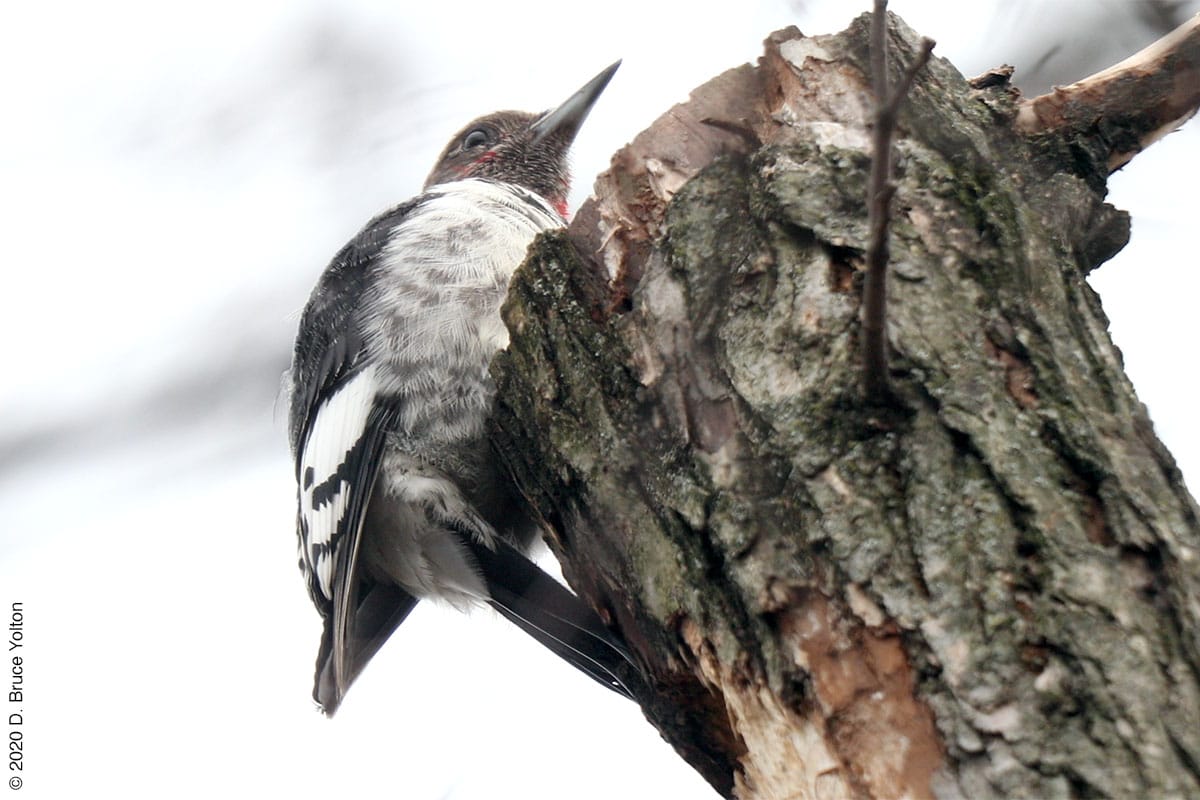
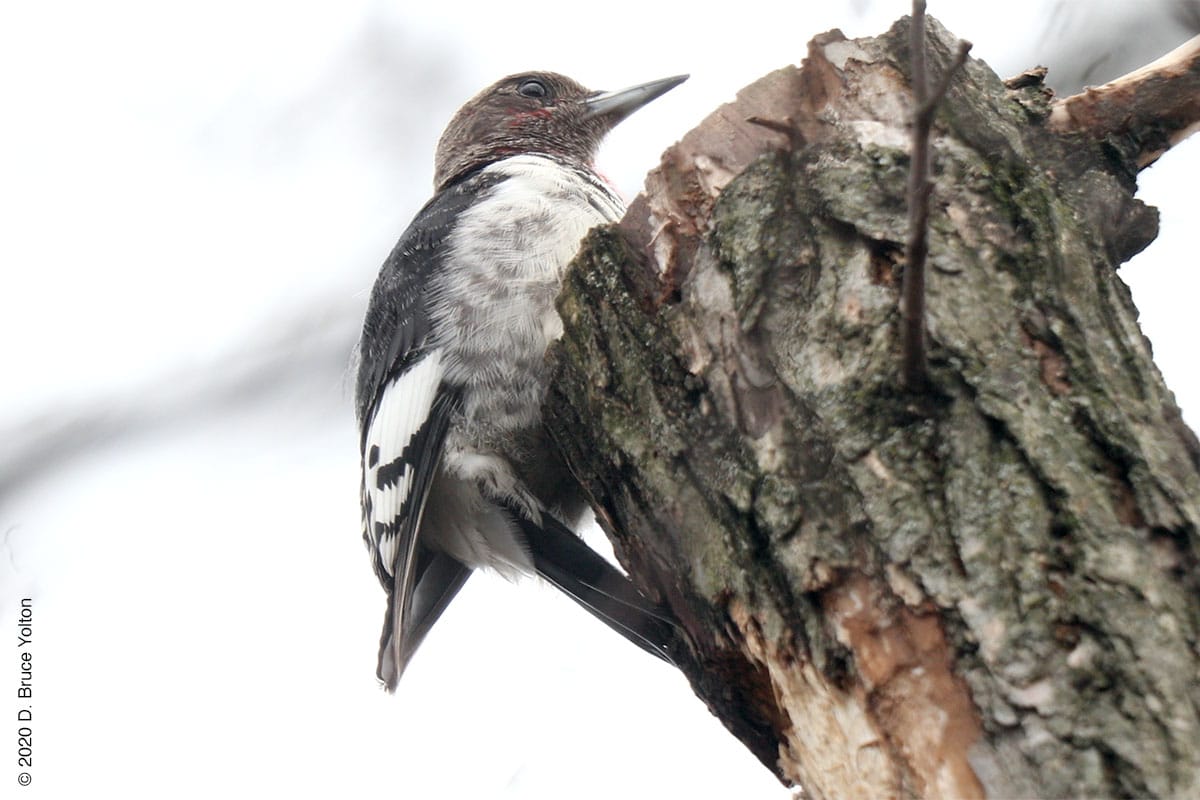
Red-headed Woodpecker

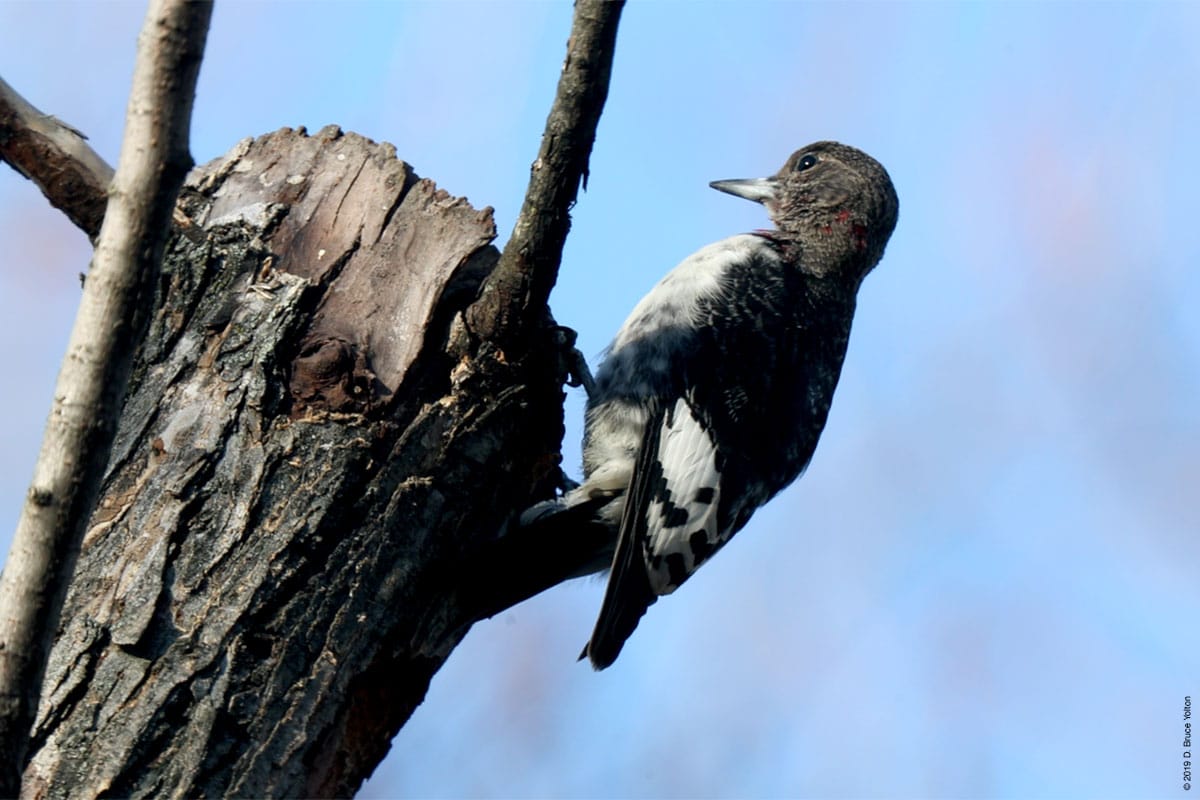
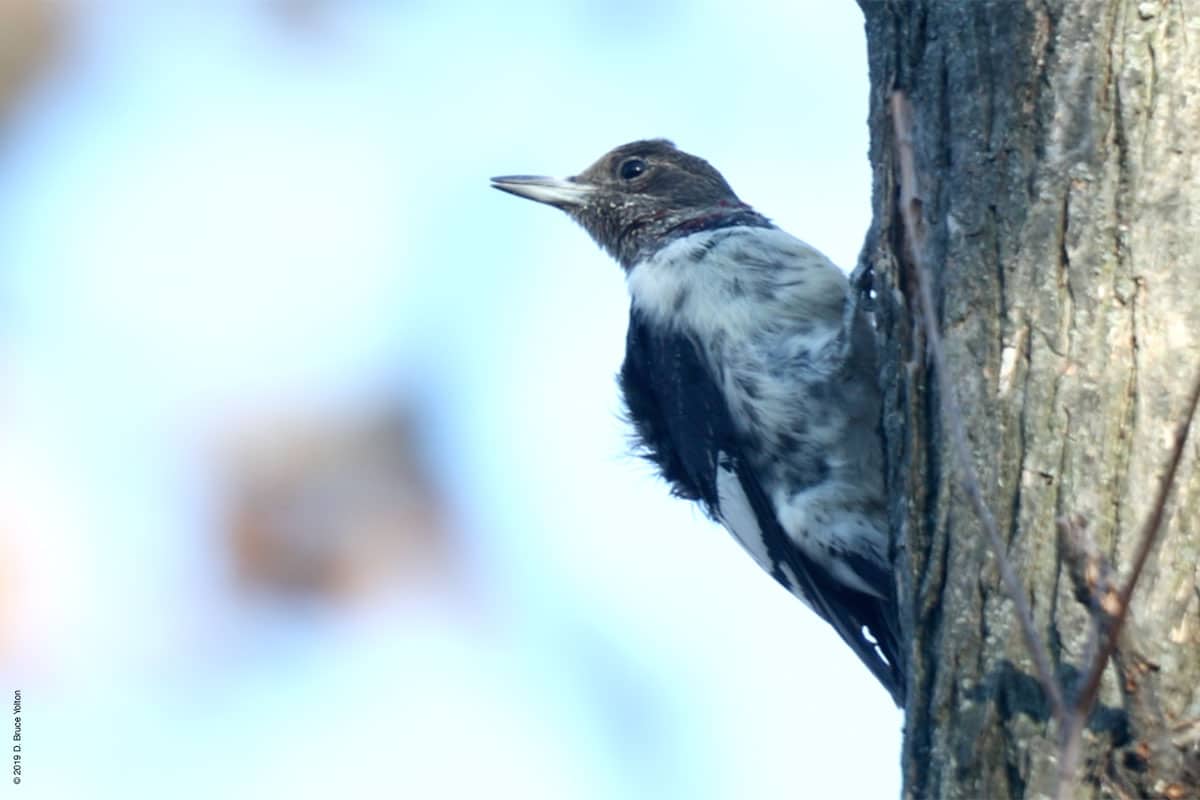
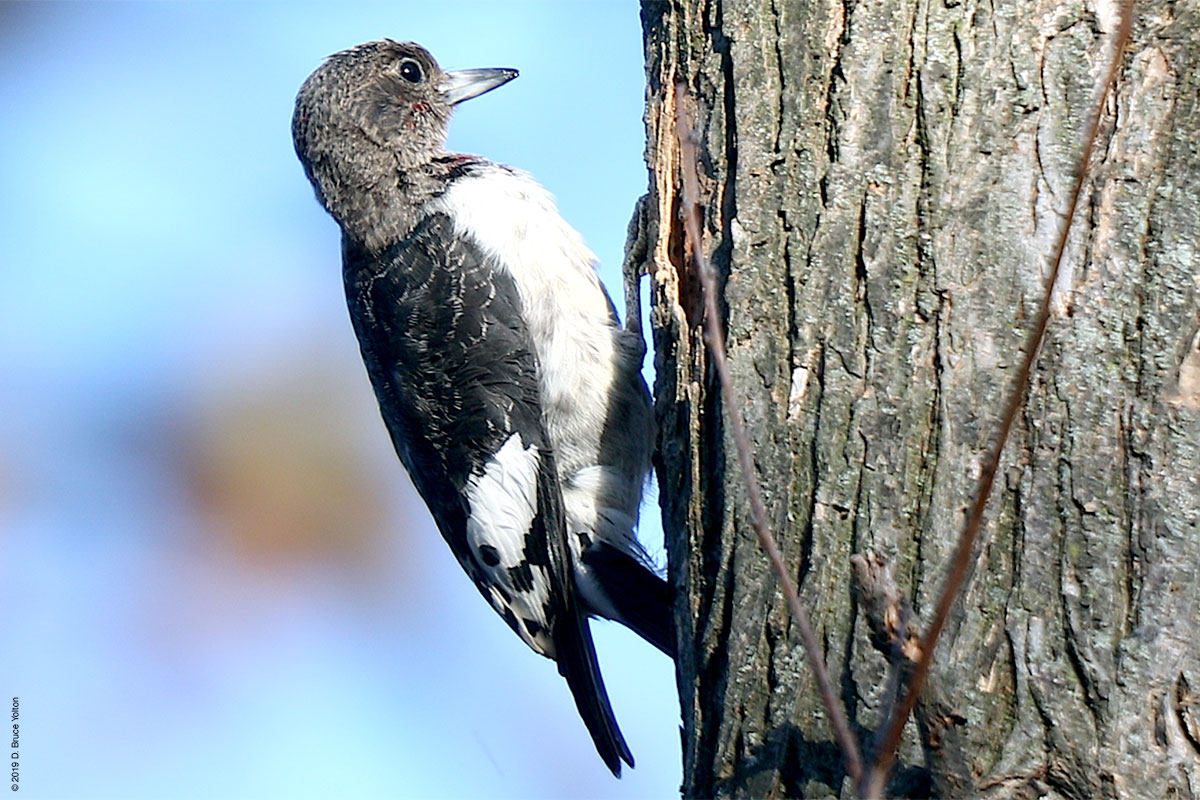
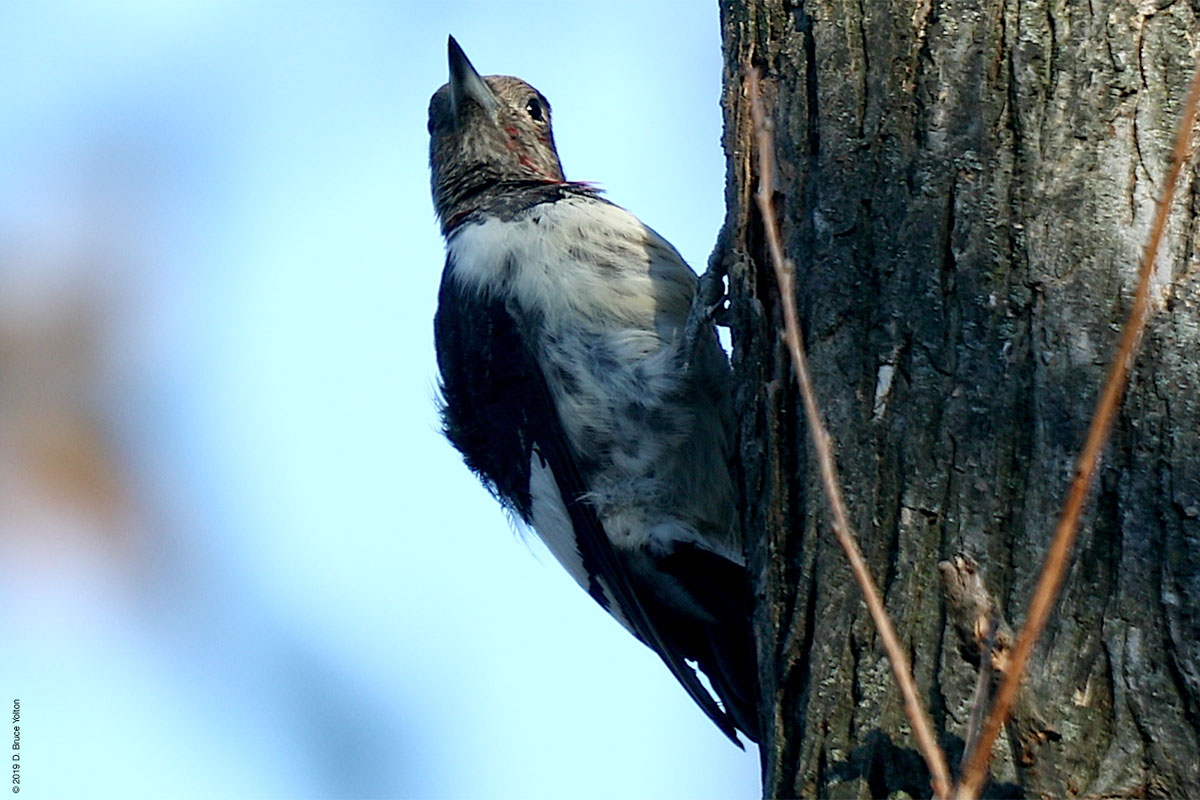
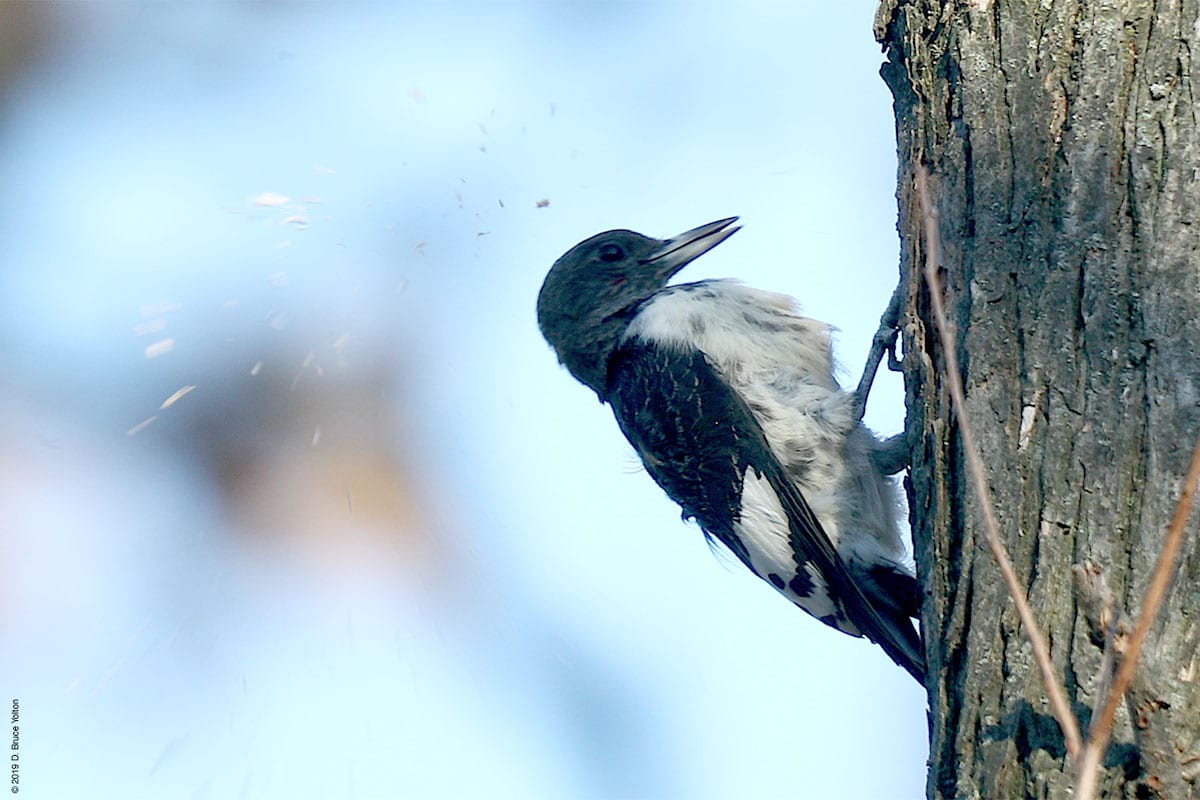
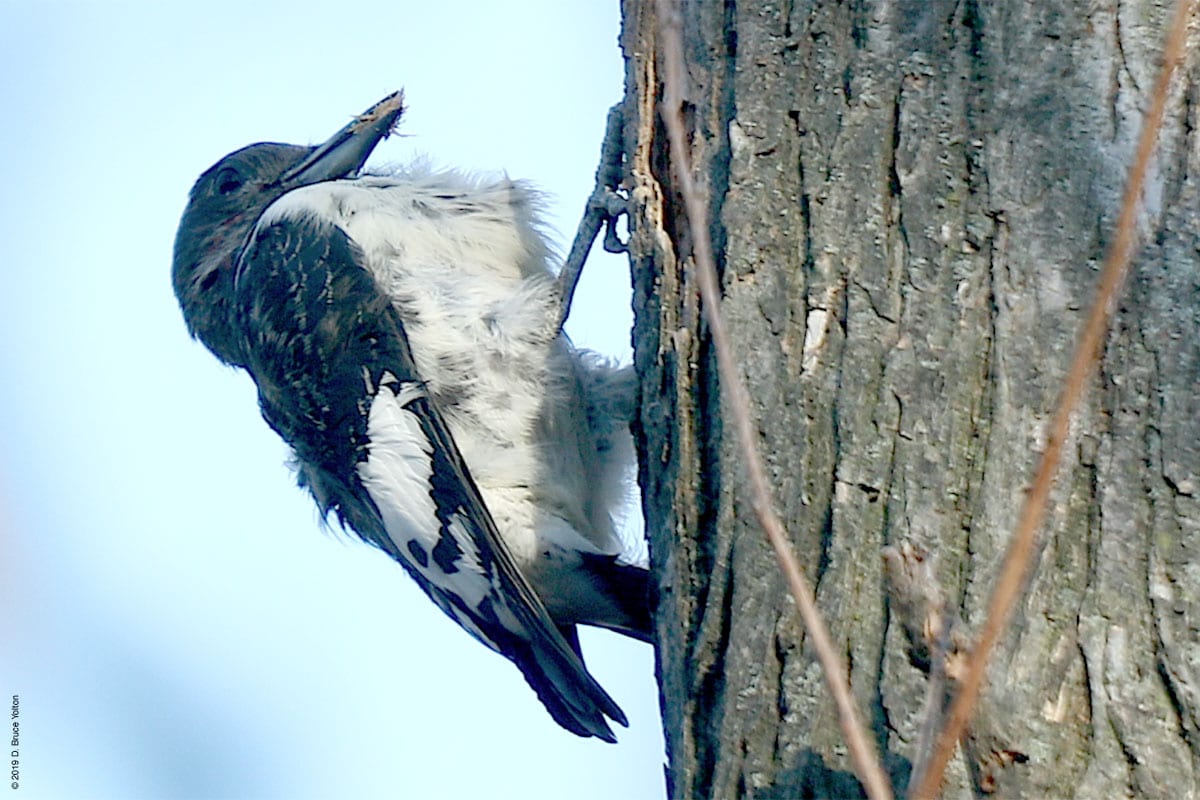
For about a week a Red-headed Woodpecker has been reported in Central Park.  I finally got a chance to see it on Saturday.  Like most of the Red-headed Woodpeckers we get in Manhattan, it is an immature bird, without a red head.  It has selected a stand of oak trees west of ball field number 2 in the North Meadow and east of light W9802.  (If you don’t know the “secret code” of the park street lights, this decodes as W=West Drive, 98=98th Street, 02=the second street light in the block.)

Red-headed Woodpeckers excavate cavities and then store nuts in them.  If this one behaves like ones we’ve had in previous years, it should be fun to watch this activity through the winter.

20191207RHWO01
20191207RHWO02
20191207RHWO03
20191207RHWO04
20191207RHWO05
20191207RHWO06

Pale Male

I caught up with Pale Male on Wednesday on one of his favorite window railings at 73rd Street and Fifth Avenue.  The days have gotten short and soon he and Octavia will be working on the nest for next season.  Last year, there were no reports of anyone seeing Pale Male and Octavia copulate and the eggs didn’t hatch.  Let’s hope for a more productive 2020.

20191204RTHA01
20191204RTHA02
20191204RTHA03
20191204RTHA04

Great Horned Owl

A Great Horned Owl was found in Central Park today.  I came late in the day so I could see the fly out. By the time I arrived the owl, which had been harassed by Blujays, was now high in a tree and tough to photograph.  But the owl moved now and then, and I got some good looks.  I was able to see the owl preen, do some pre-flight stretches, and then fly out.
20191117GHOW01
20191117GHOW02
20191117GHOW03
20191117GHOW04
20191117GHOW05
20191117GHOW06
20191117GHOW07
20191117GHOW08
20191117GHOW09
20191117GHOW10
20191117GHOW11

Eastern Bluebird

An Eastern Bluebird was seen in the West 80s of Central Park of Central Park on Friday (and again on Saturday).  It’s the state bird of New York.  This once-prolific bird had a sharp decline of population due to nesting cavity competition from European Starlings and House Sparrows.  Nest box programs started in the 1960s and 1970s have helped the species population numbers to improve but it remains an infrequent visitor to Central Park.

20191115EABL01
20191115EABL02
20191115EABL03
20191115EABL04
20191115EABL05
20191115EABL06