Second Fledge At Washington Square Park

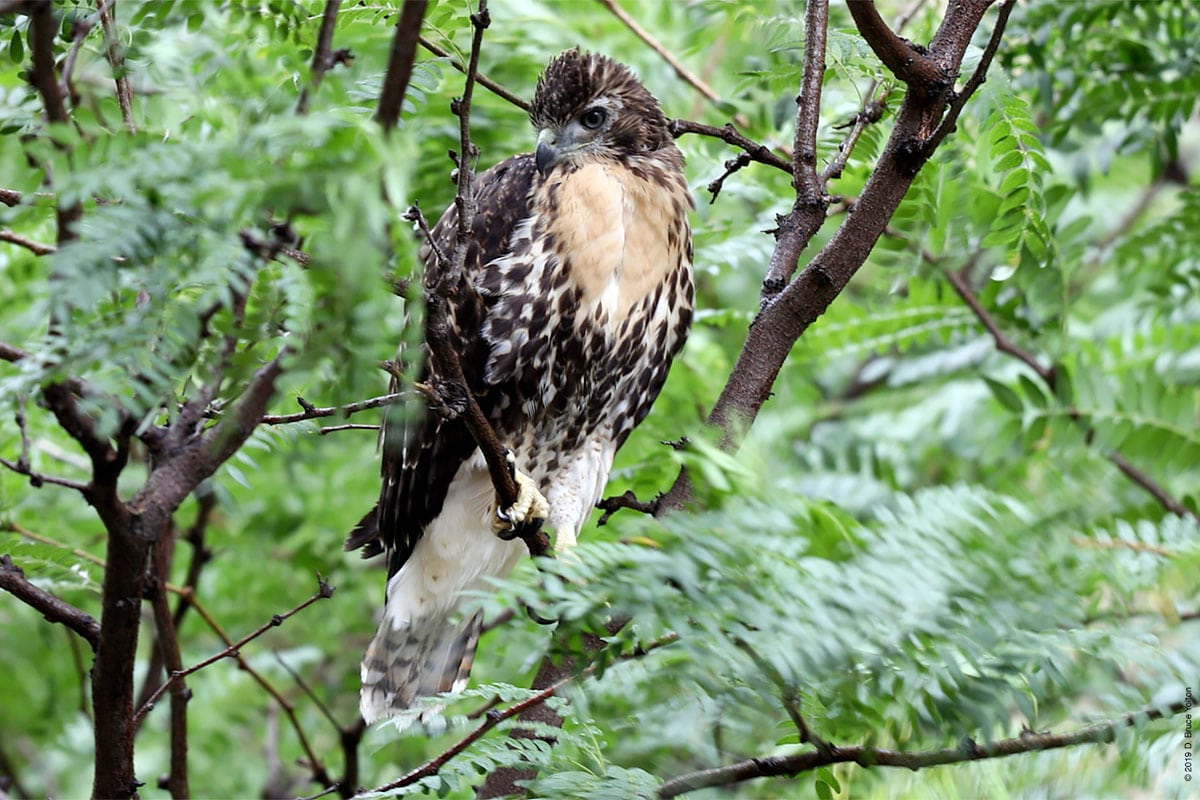
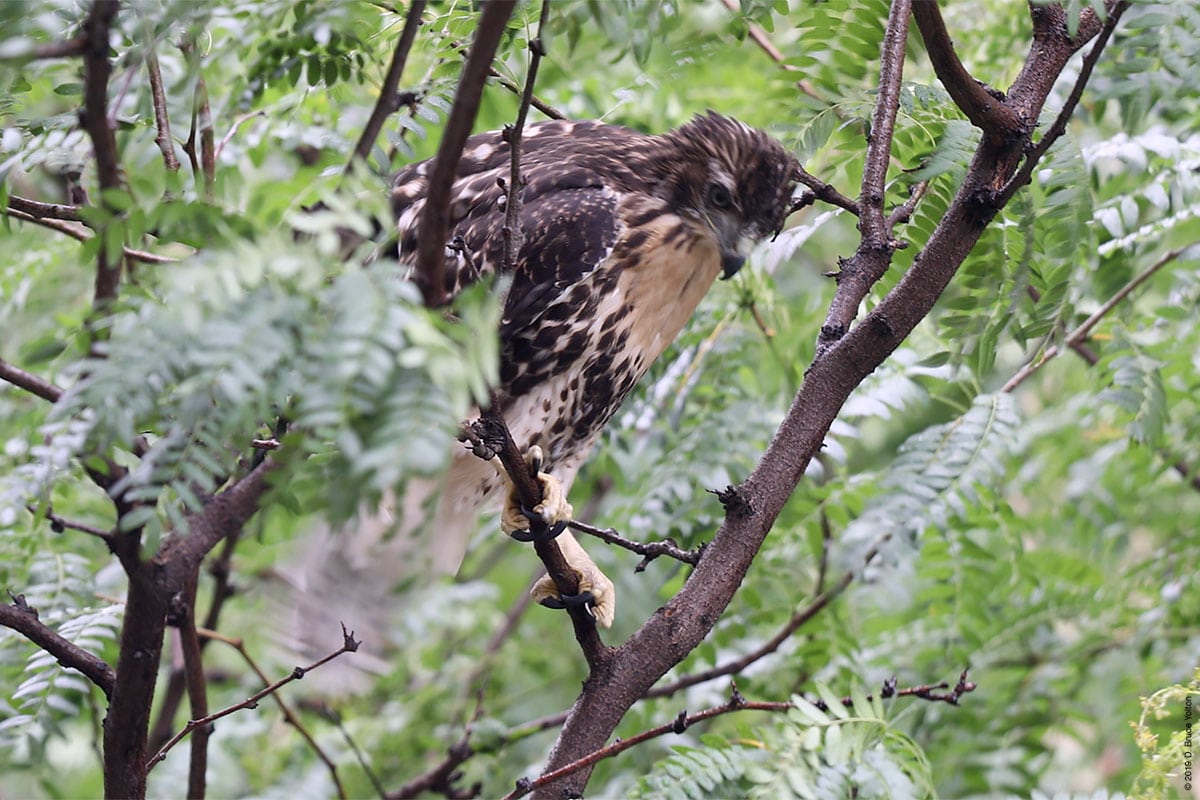
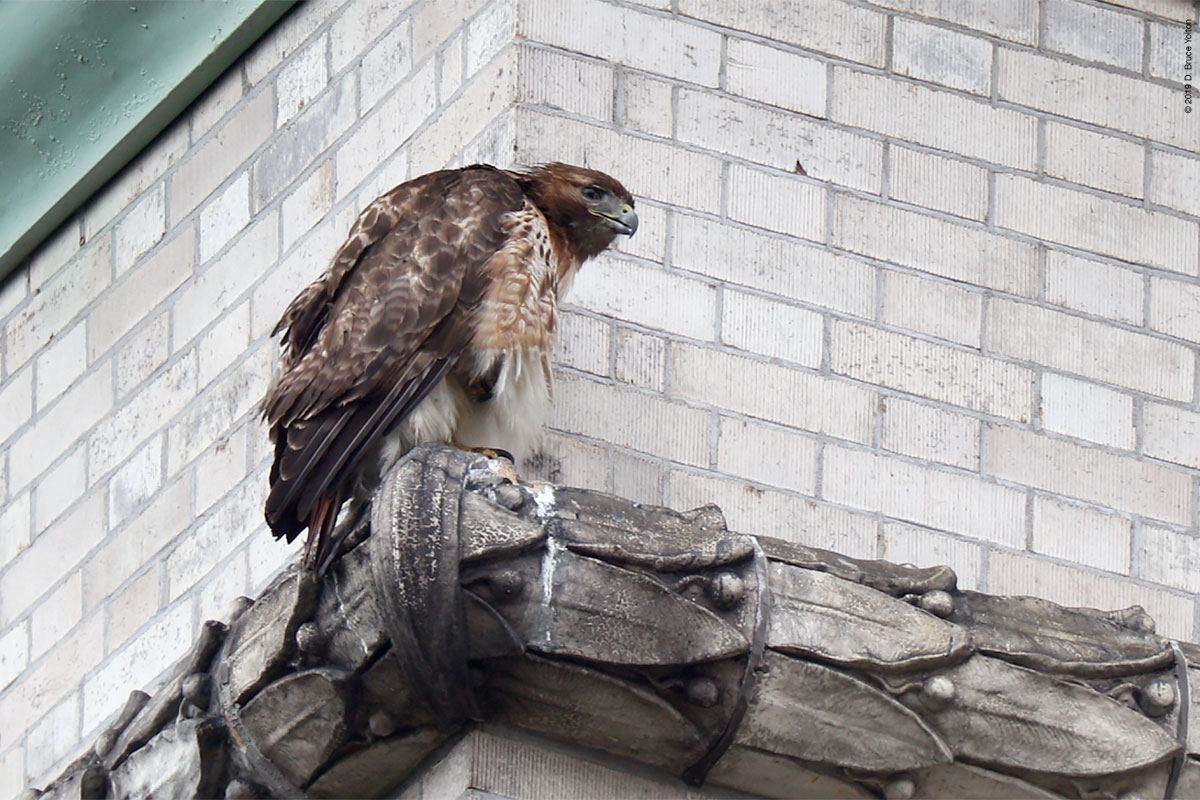
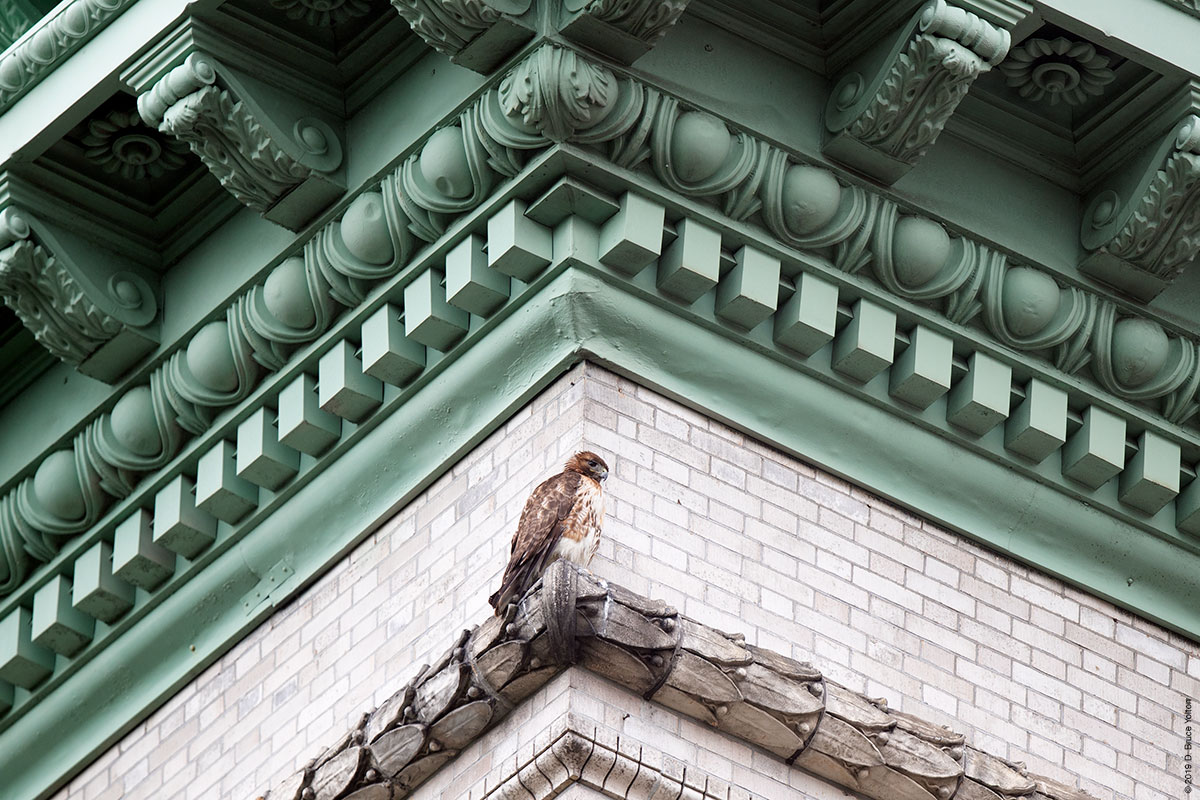
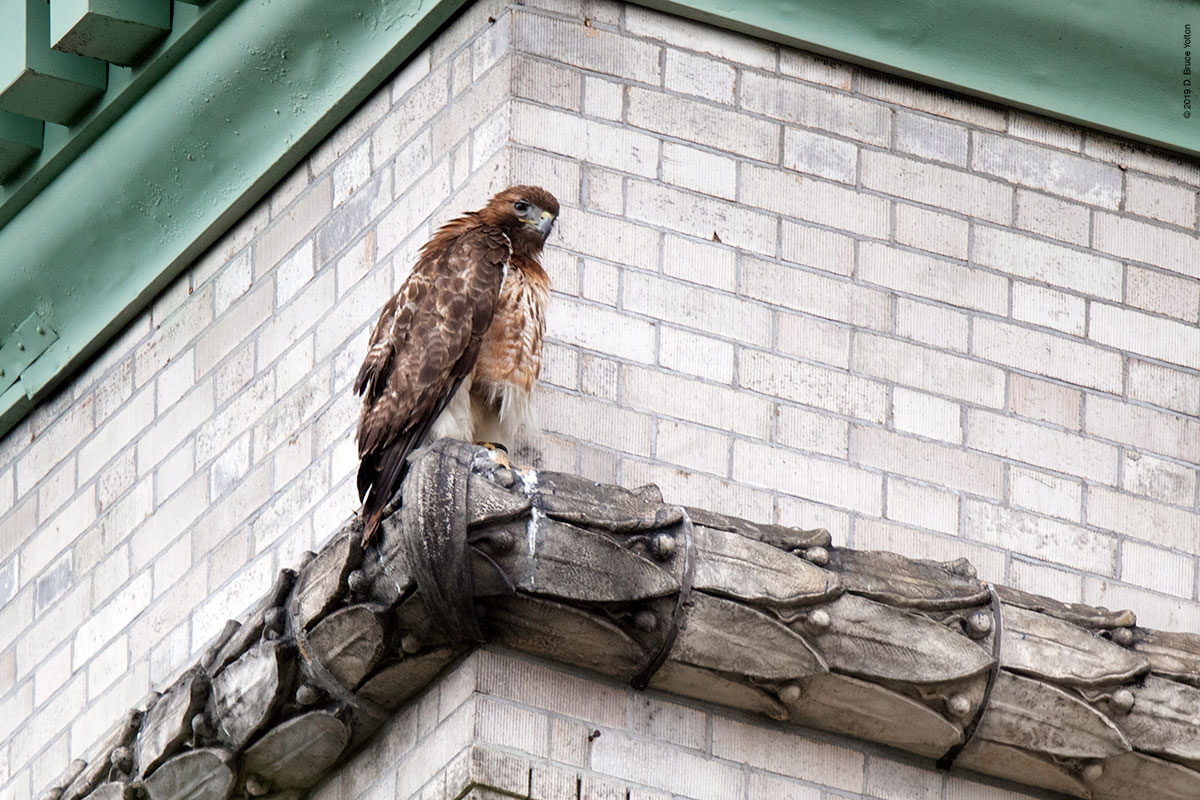
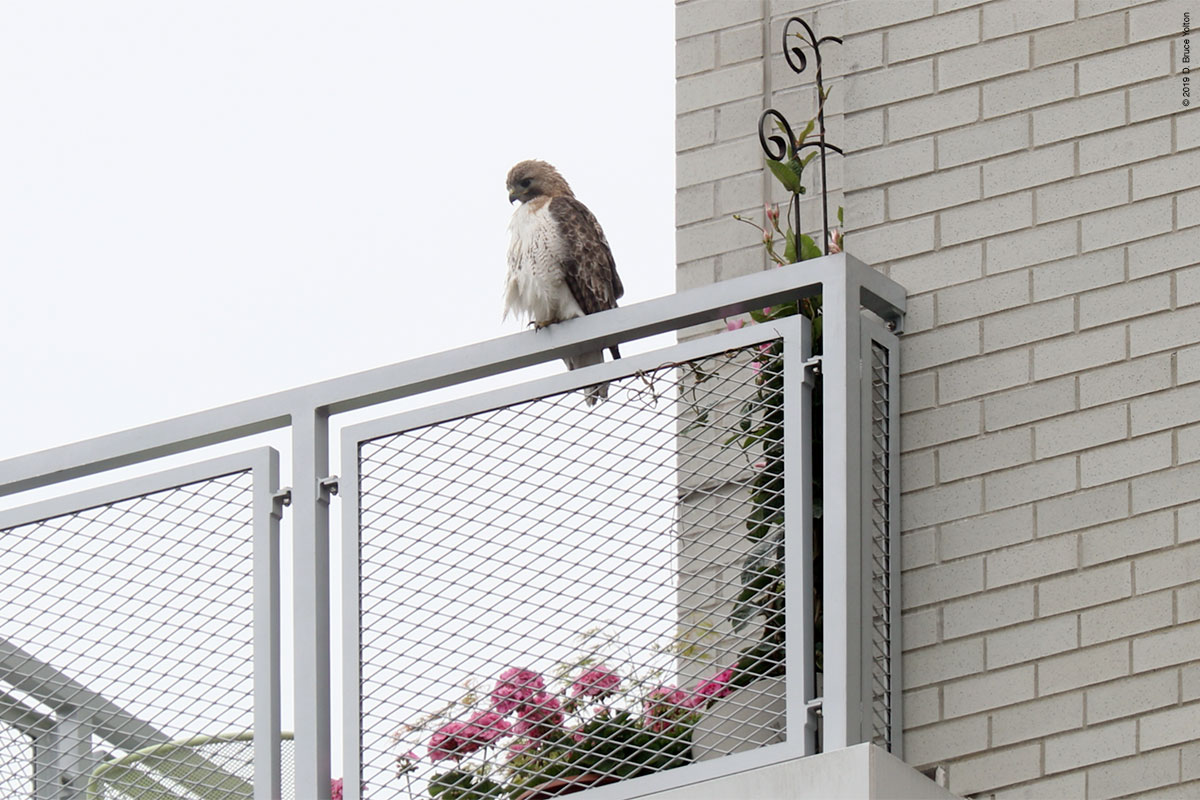
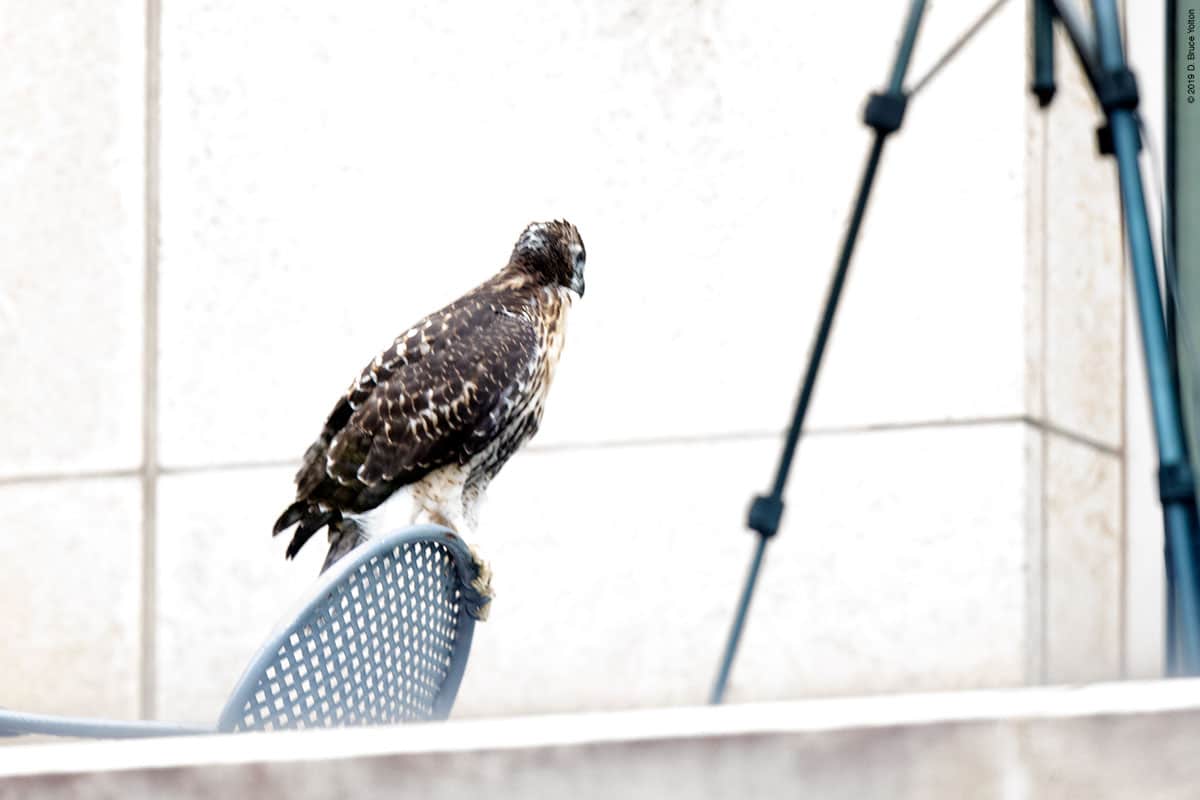
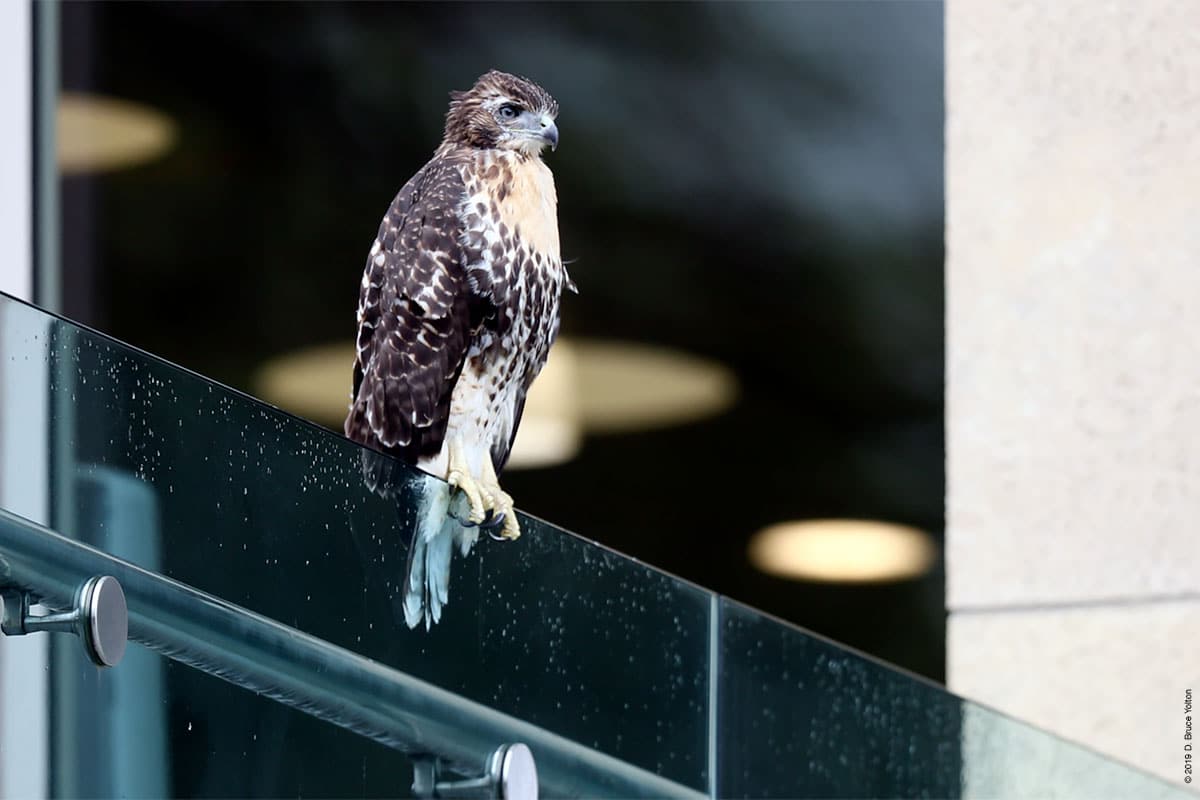
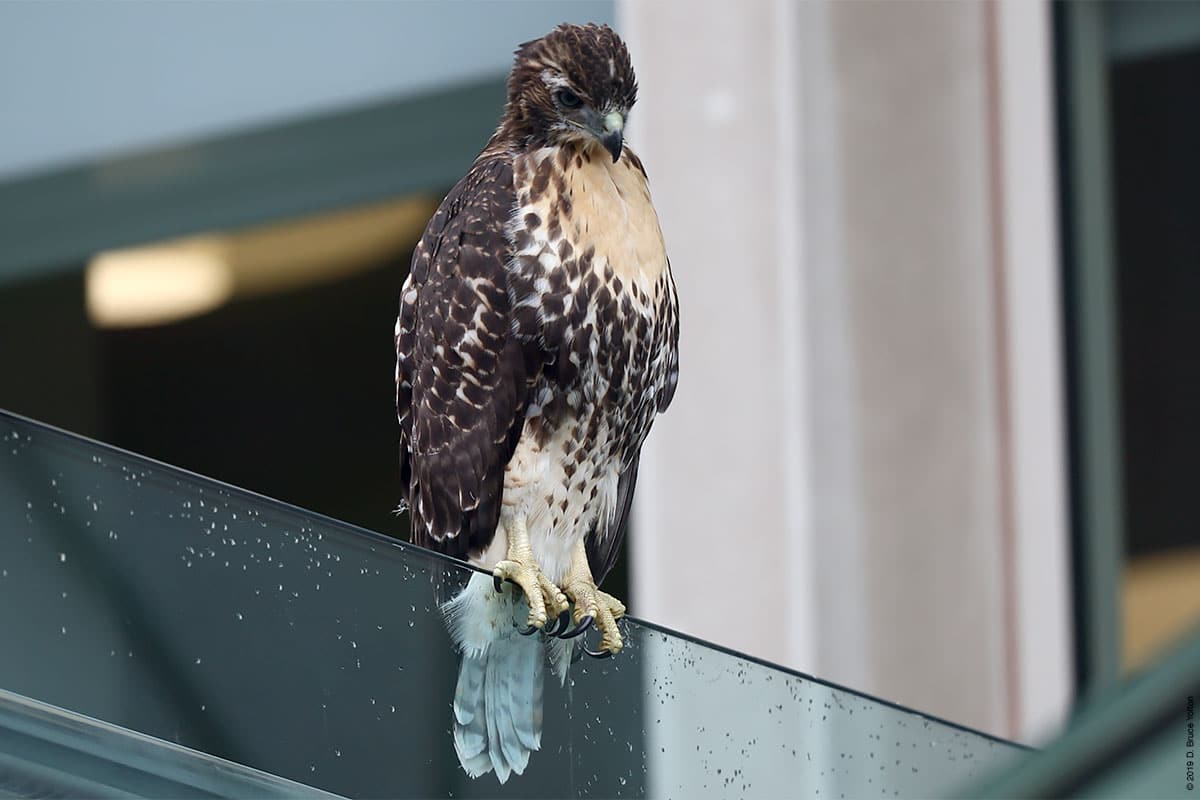
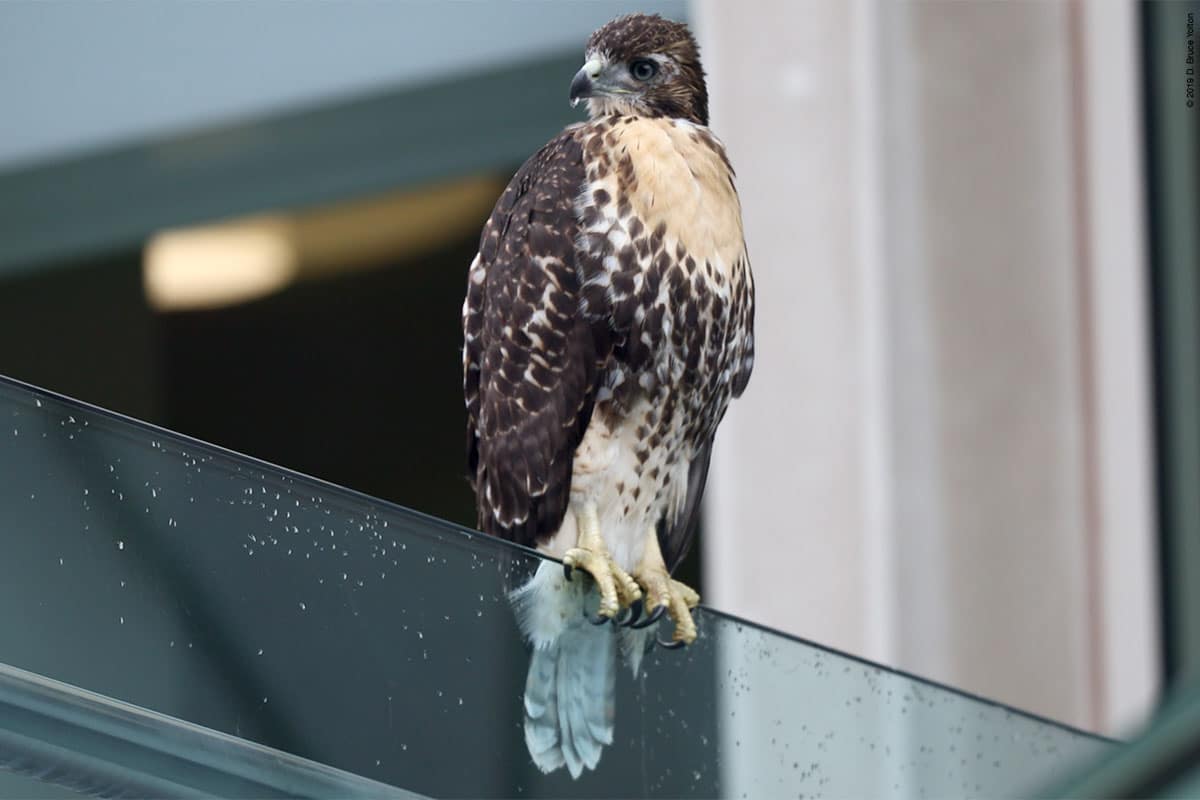
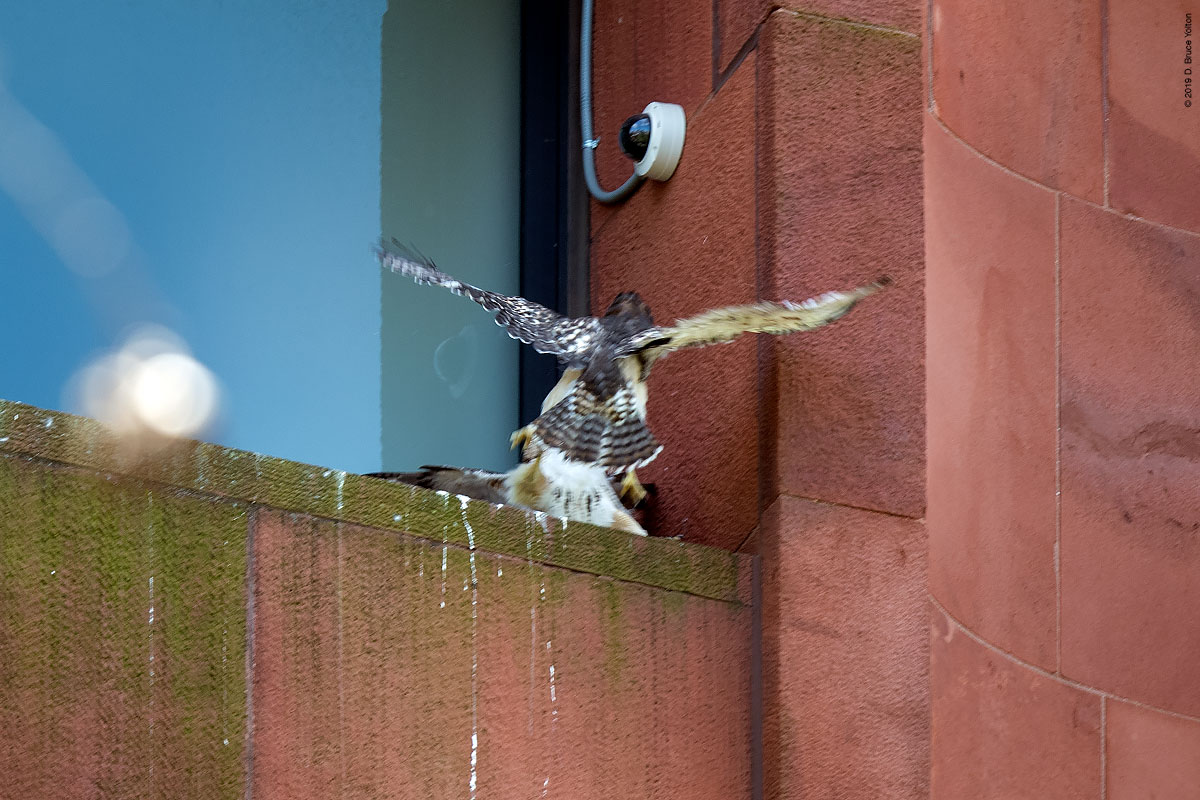
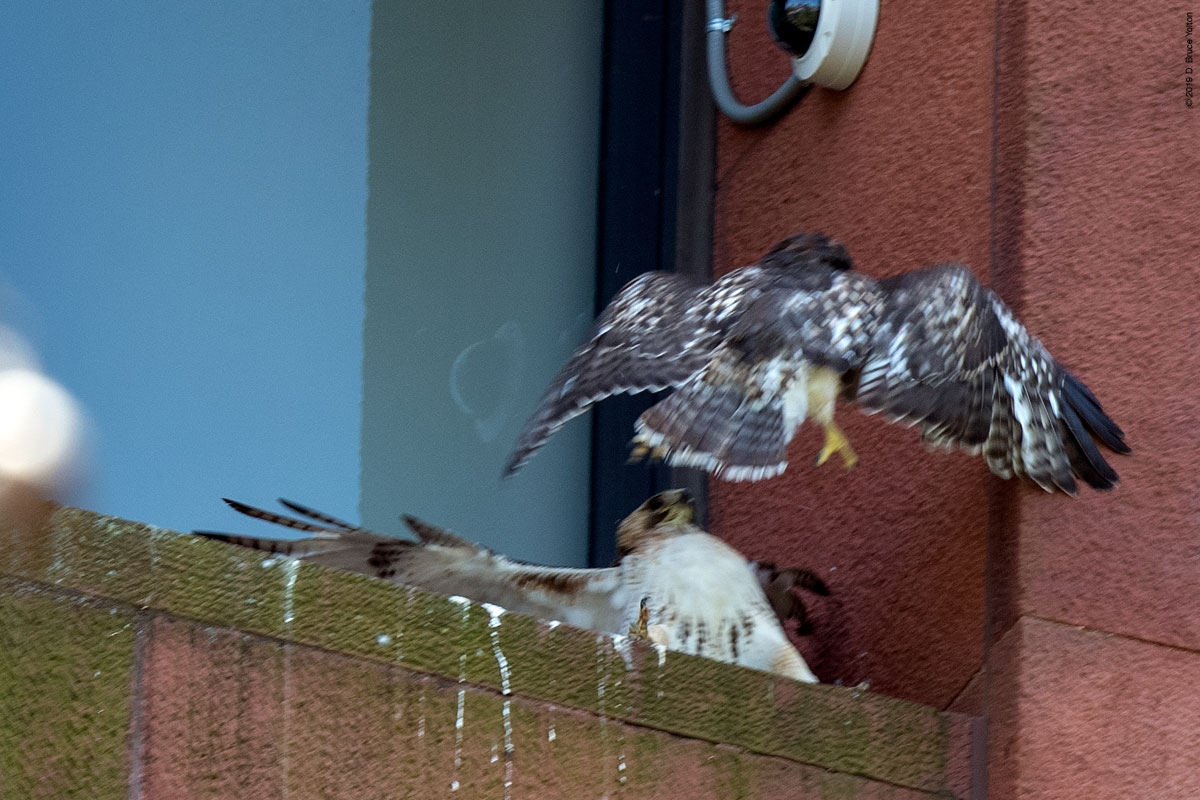
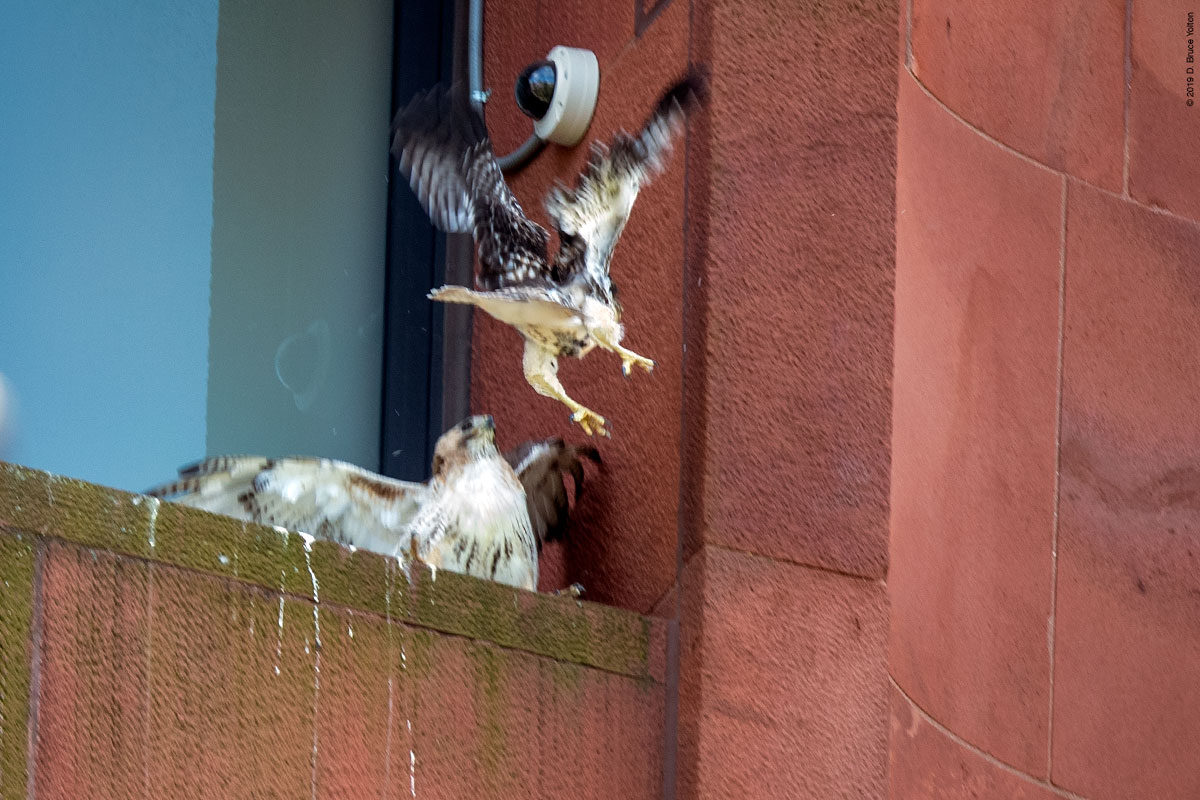
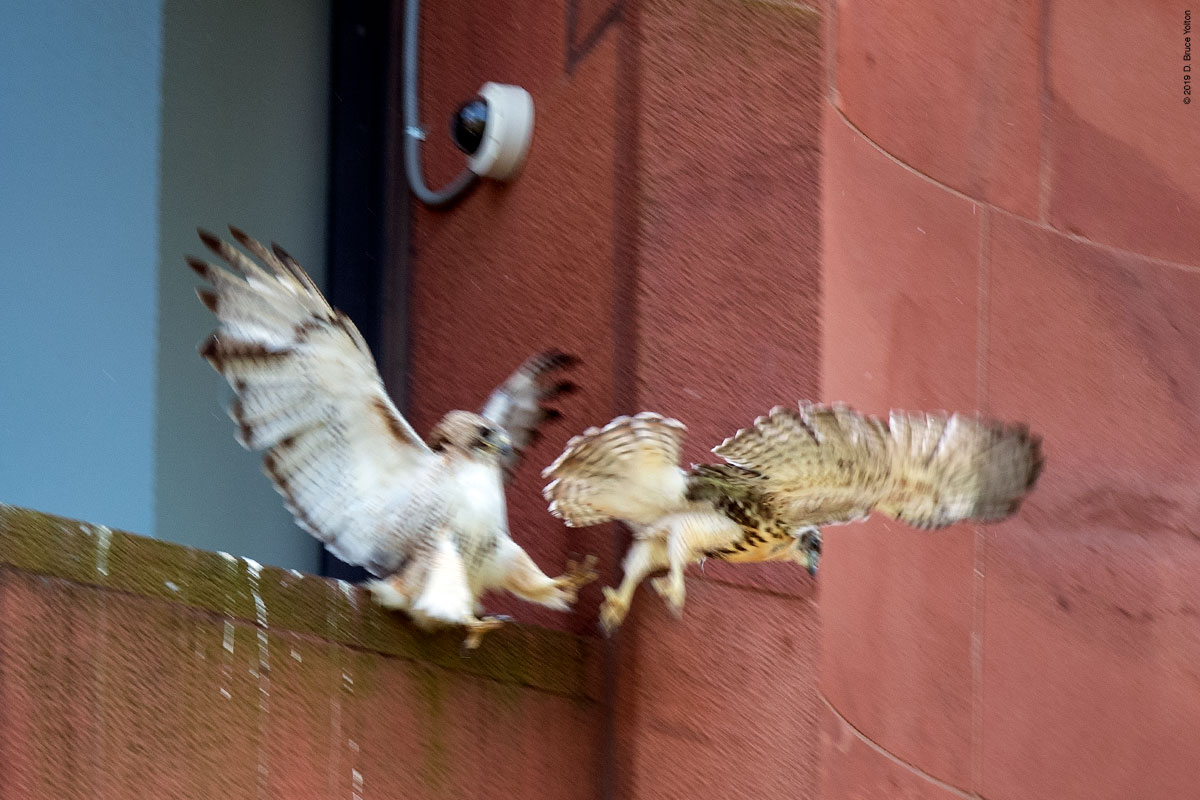
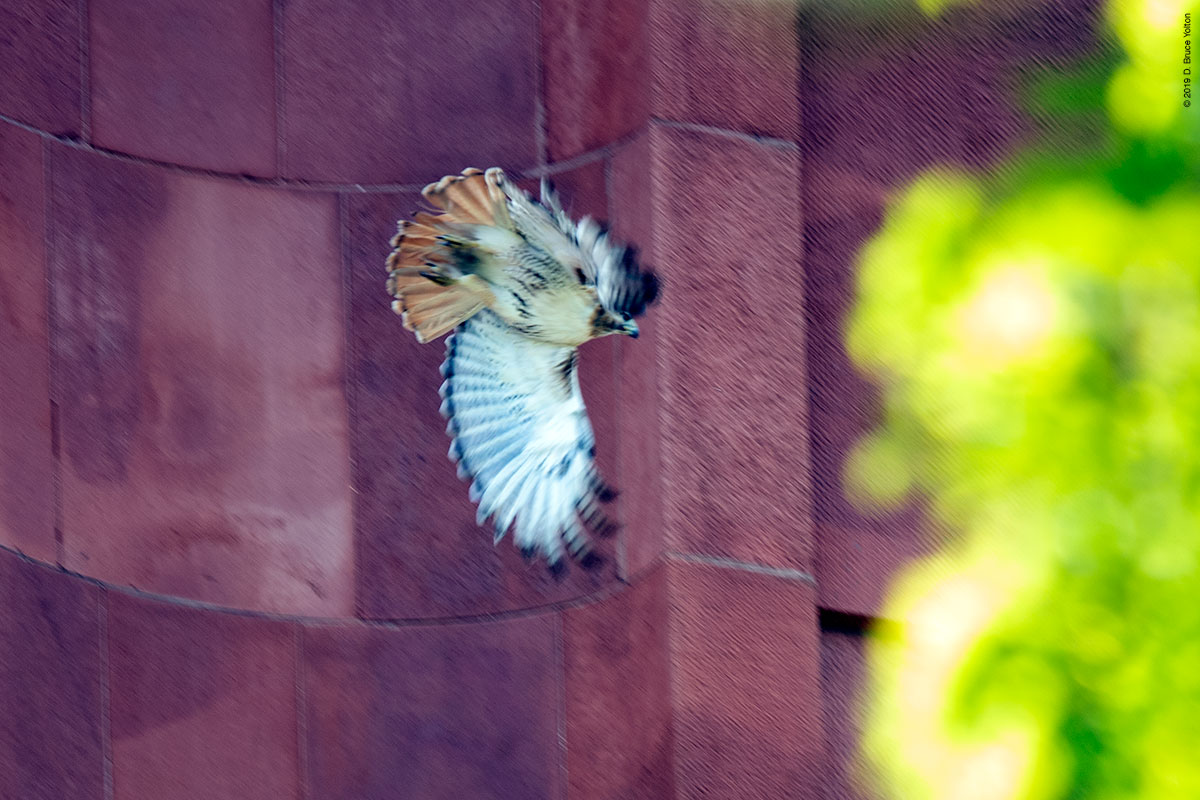
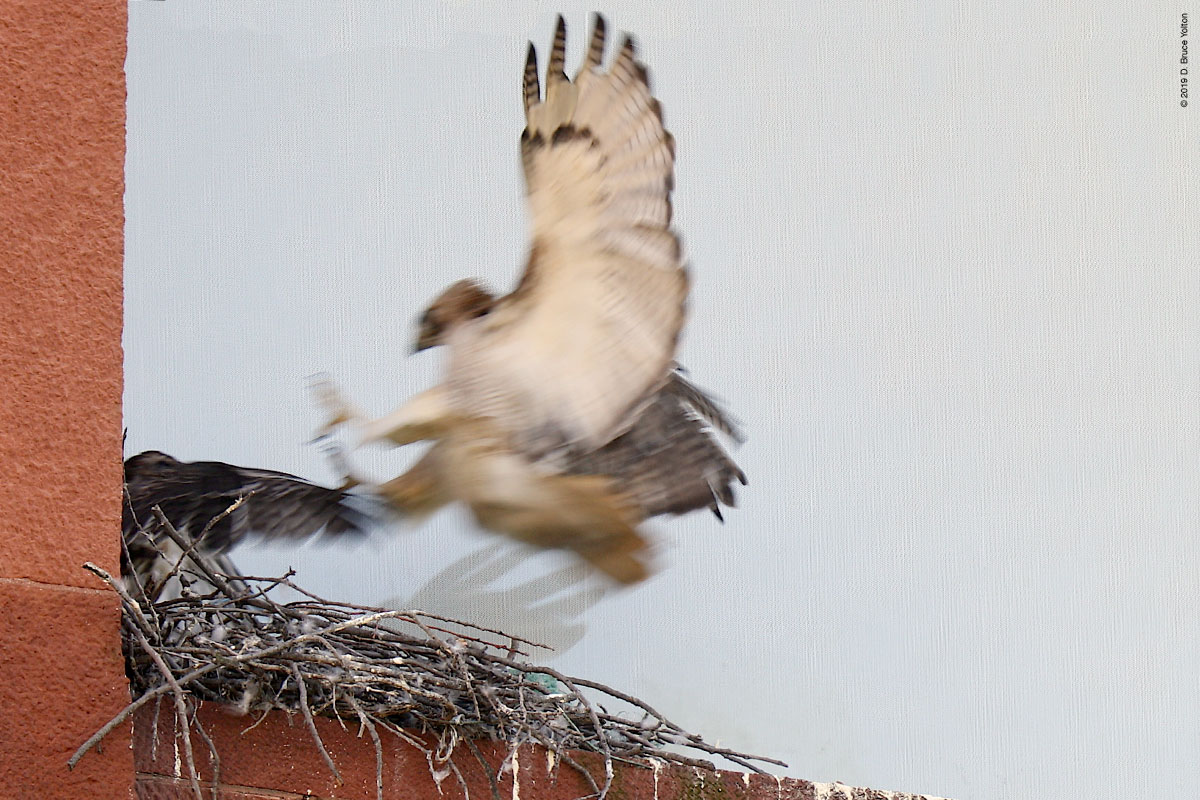
This morning, the second of three eyasses left the Washington Square Park nest.  It may have been knocked off the nest by the new adult male.  The fledgling tried to land on Pless, but did what is common for a fledgling and misjudged the glass and ledges and ended upside down in a Ginkgo Tree.  It took a long time for it to figure out how to right itself, but it managed.  The “first day of school” is hard!  For hours it didn’t move much but by the end of the day it was alert and started to explore the branch it was on.  We’ve seen this type of hard first day before. 

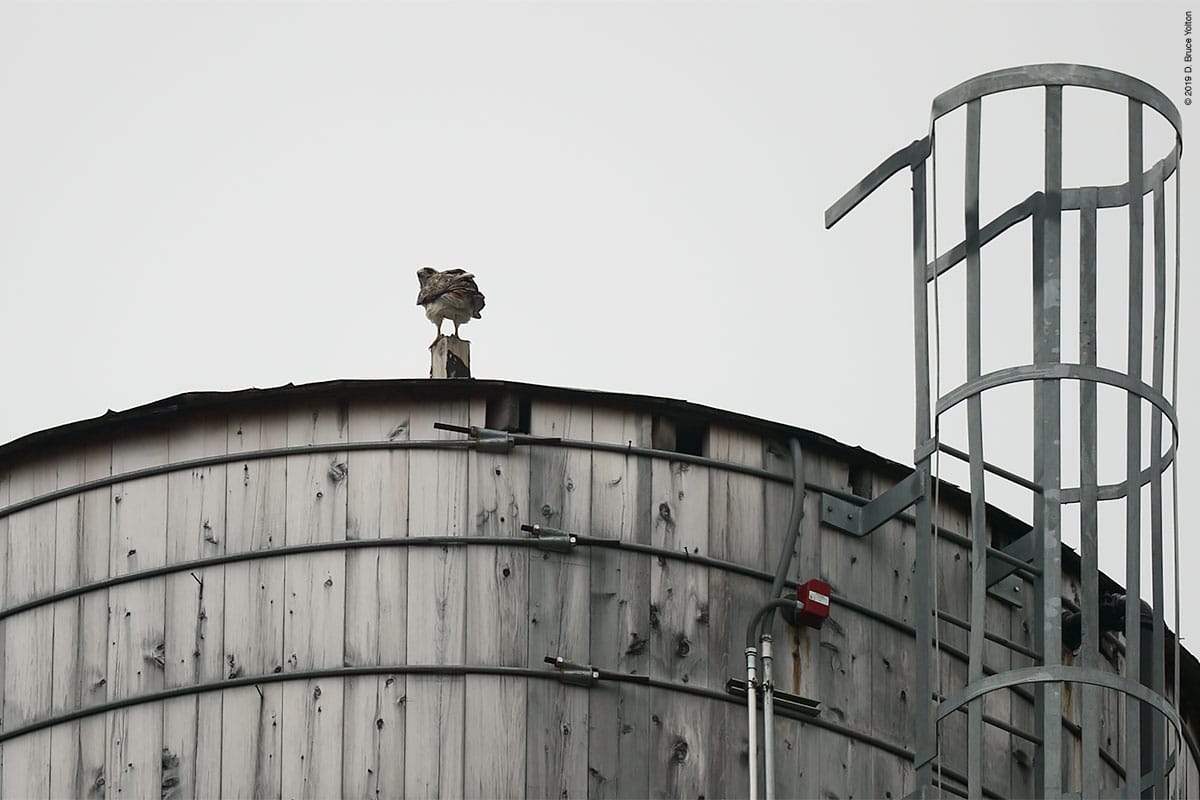
The first fledgling was not seen or heard from during the day.  The park was full of people and the noise was incredible.  We won’t have heard the fledgling if we wanted to.  Although the first fledgling had a run in with the new adult male on its first day off the nest, chances are it was just hiding somewhere on the set of connected roofs of either Pless or Goddard.  In years past, we’ve lost track of a new fledgling on theses roofs for a day or two.

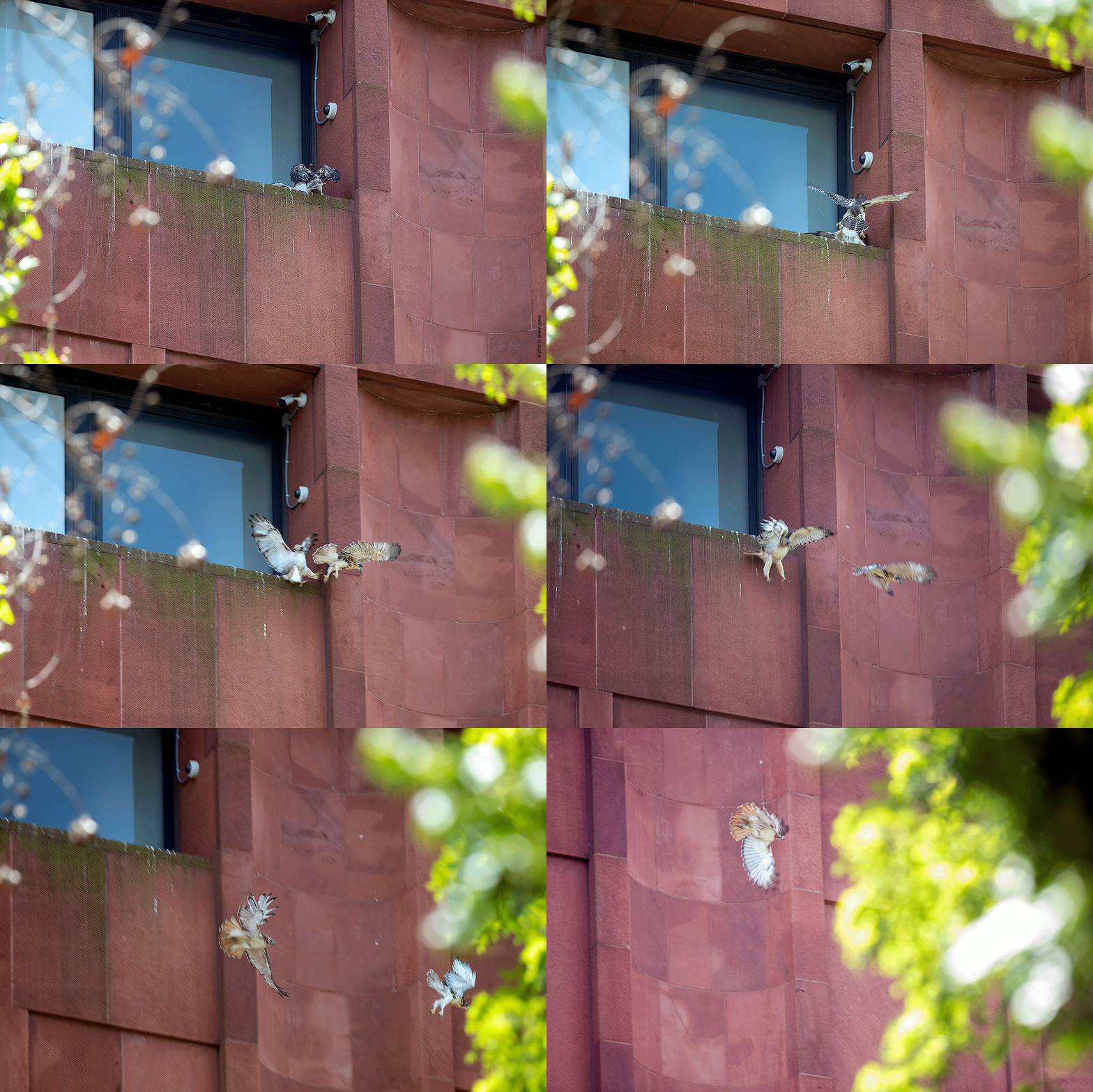
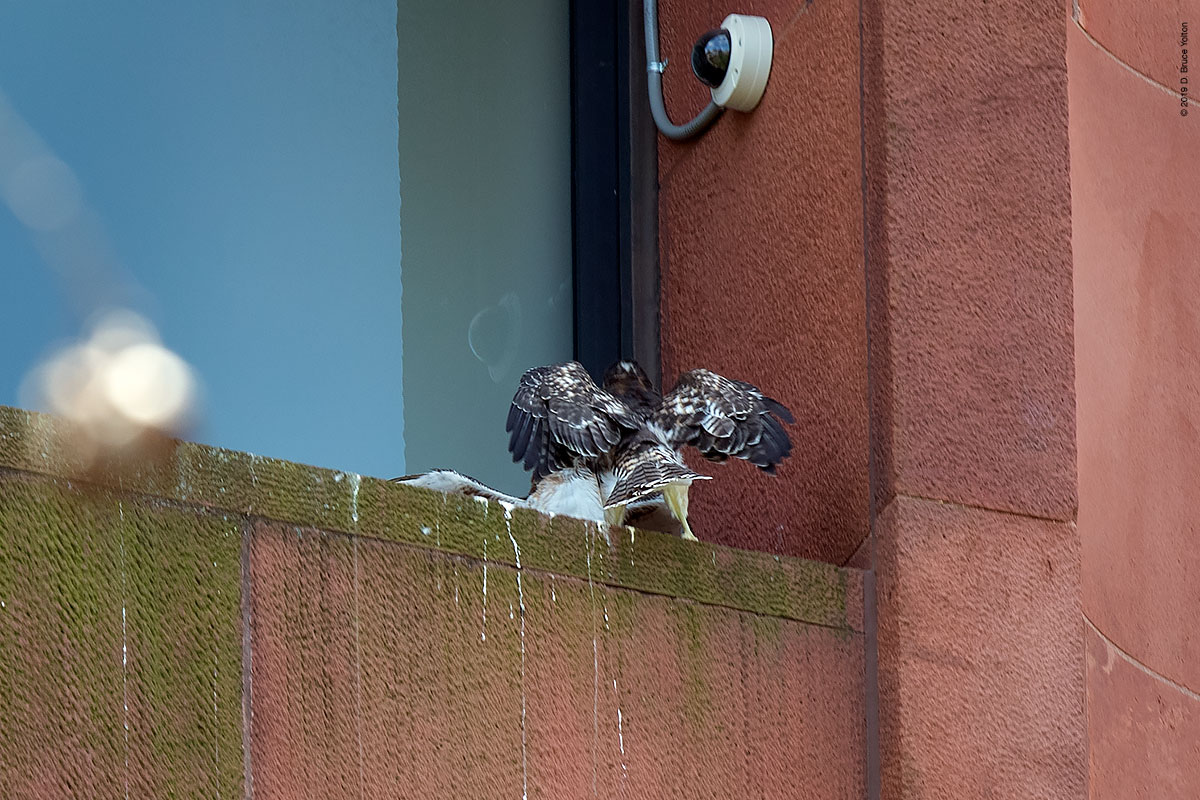
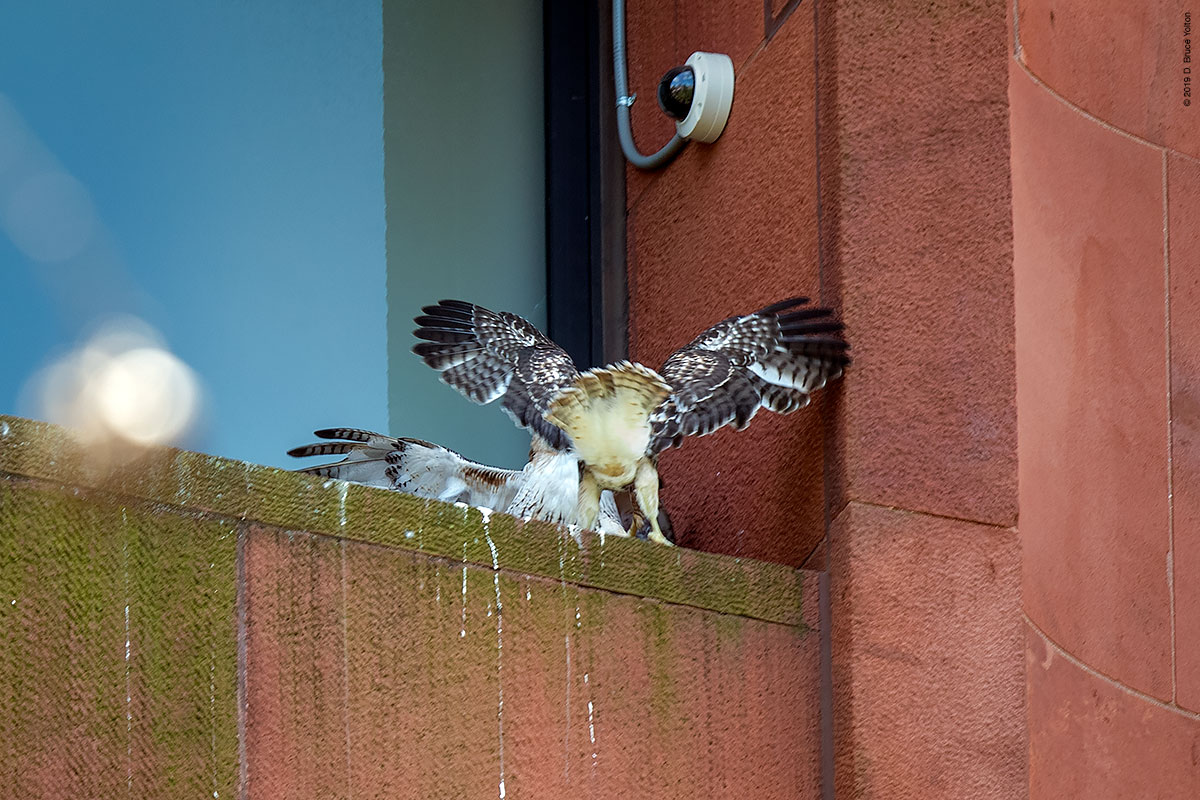
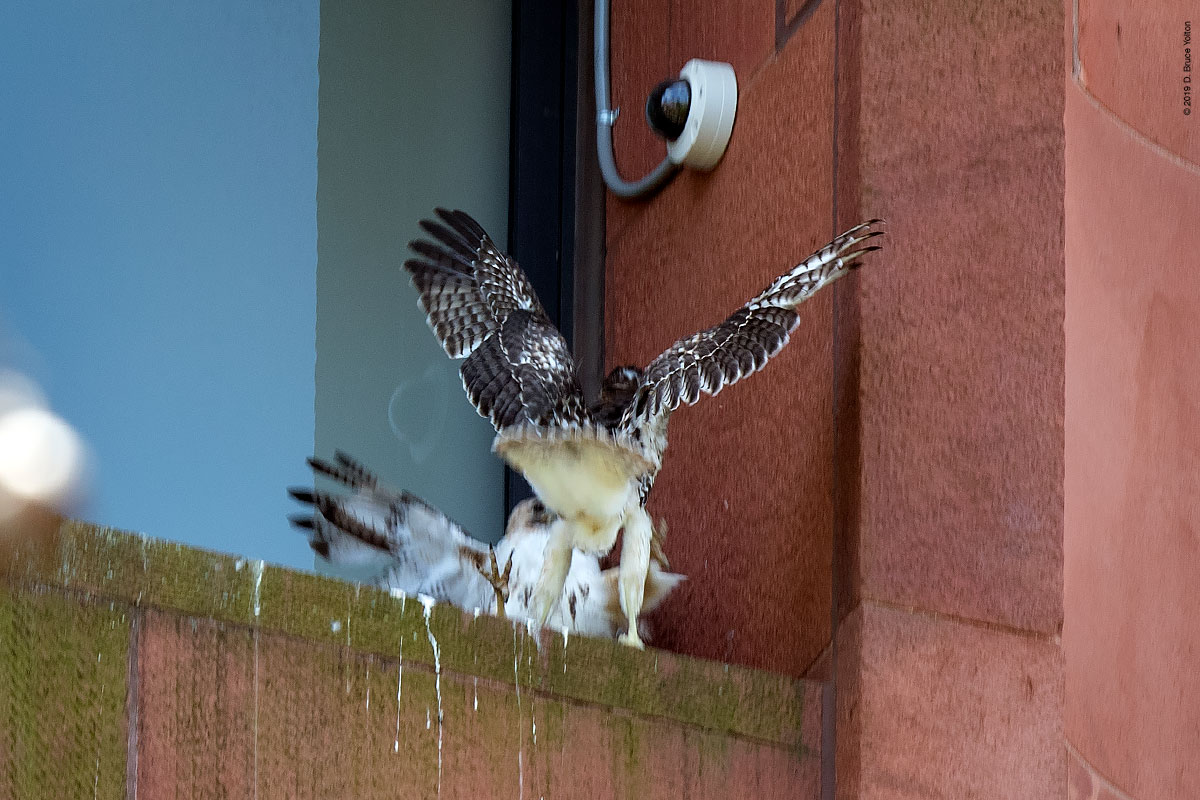
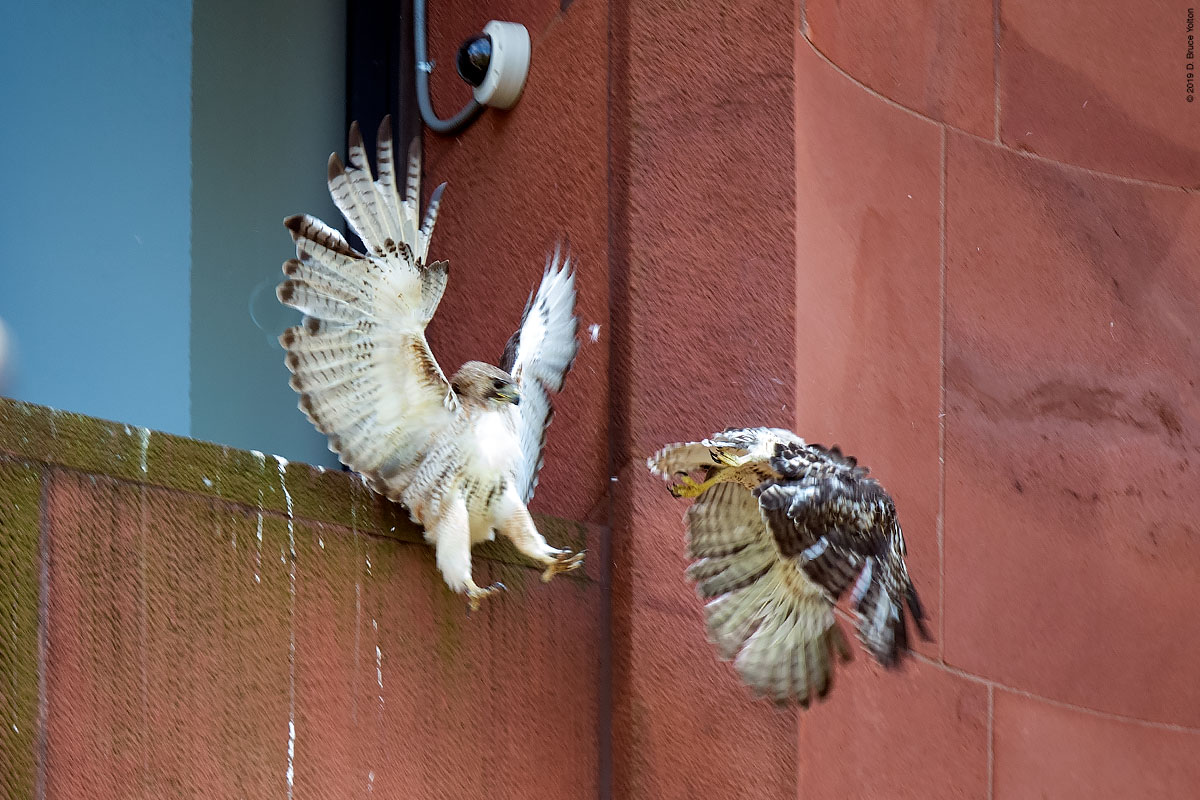
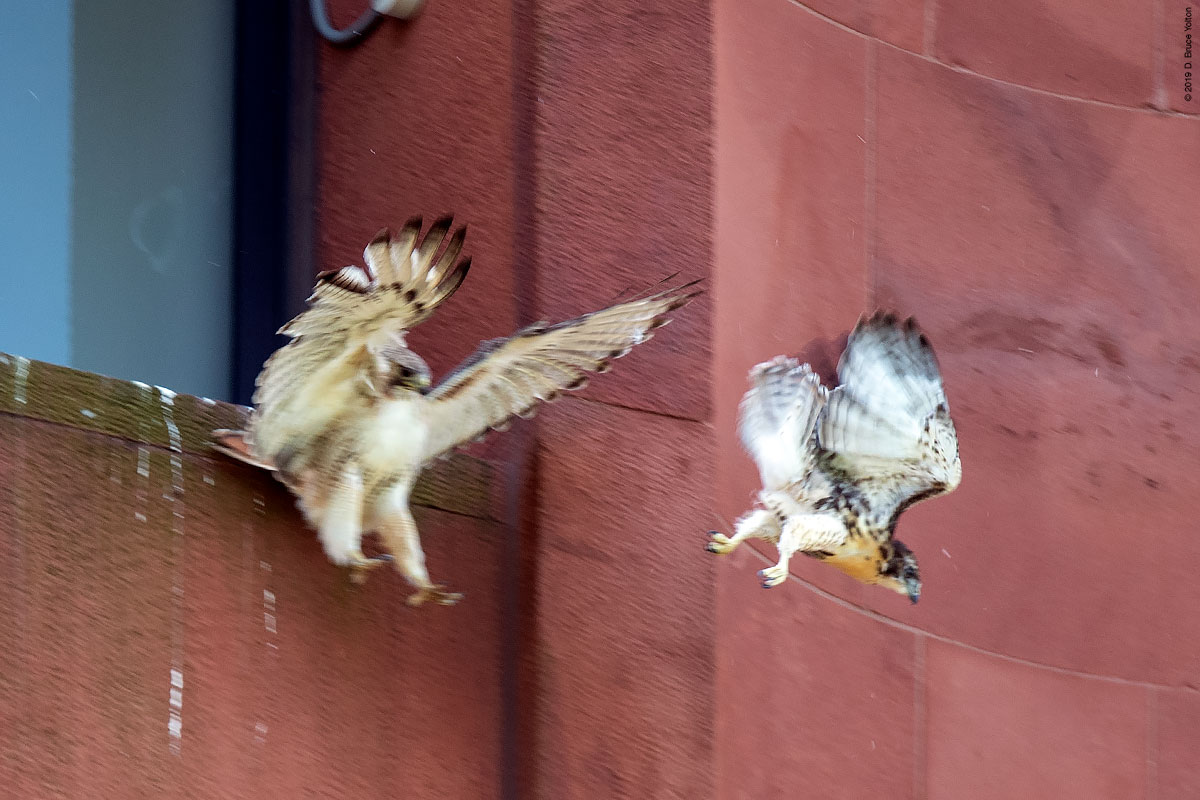
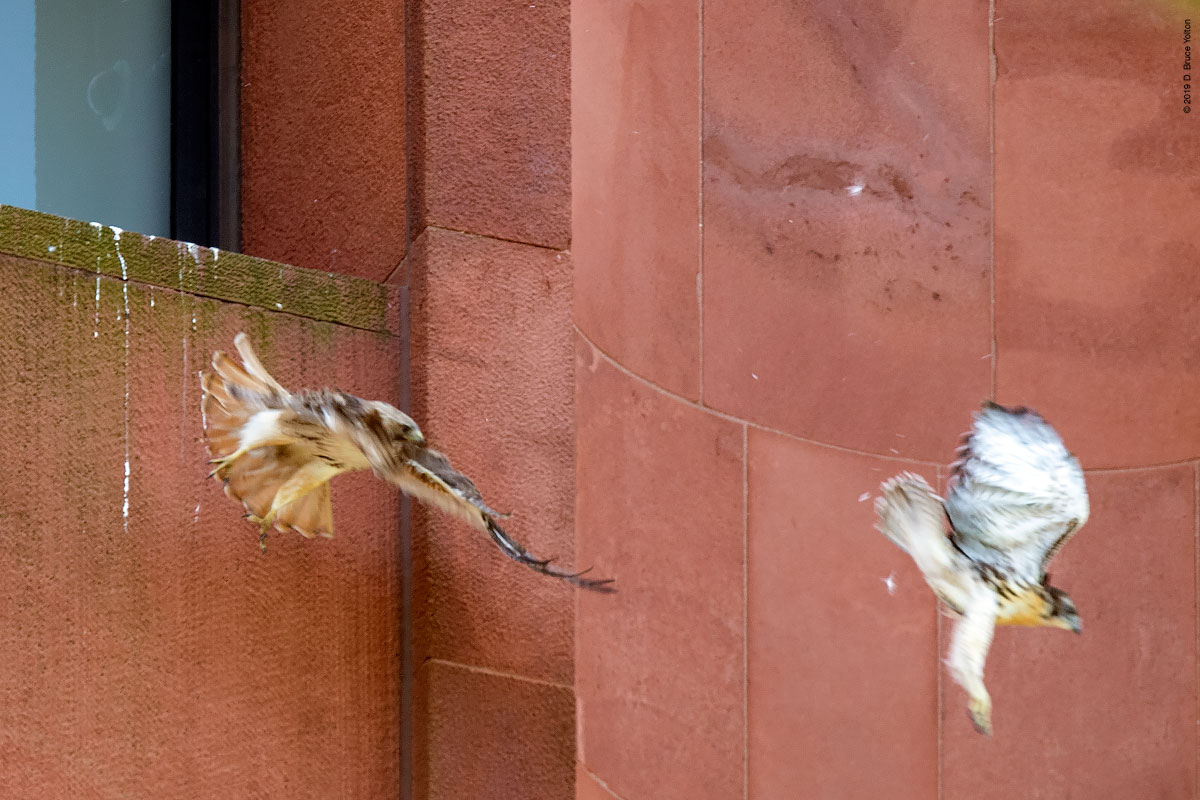
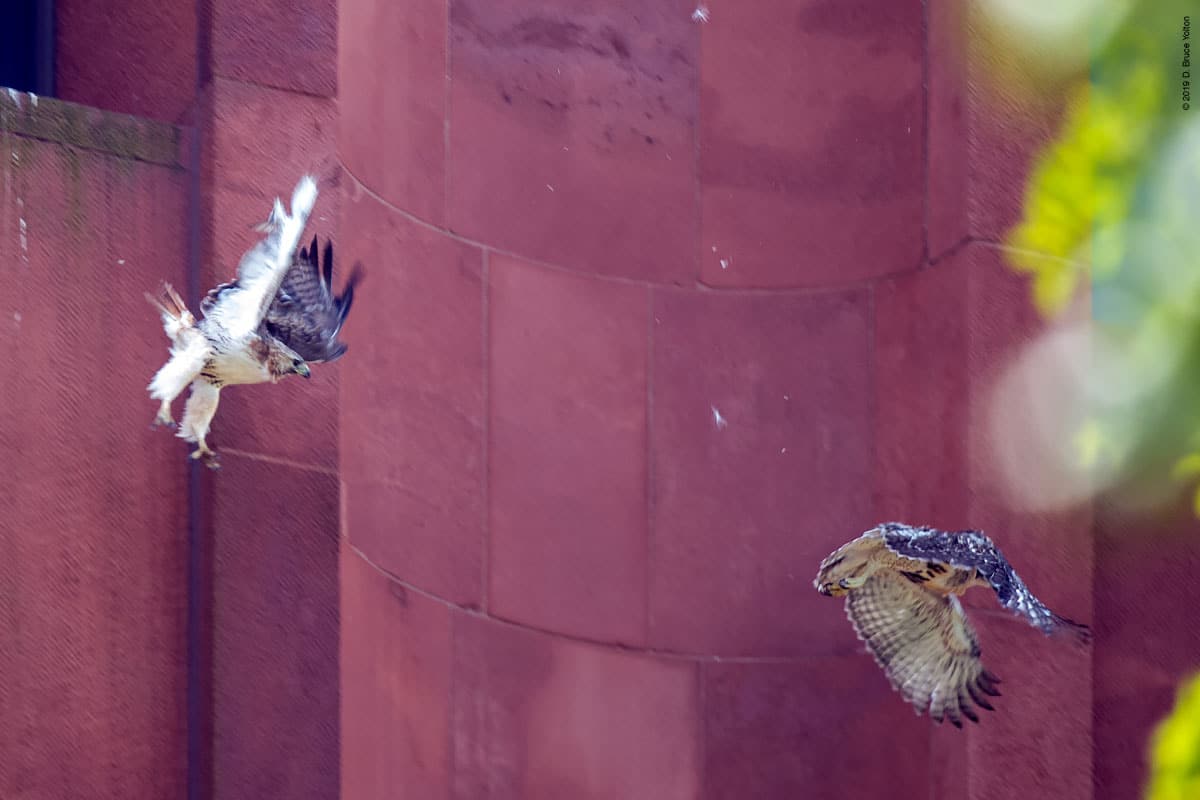
The new adult male continued to be aggressive and made multiple visits to the nest.  It gave the remaining eyass a very hard time on a few occasions.  We’re all trying to figure out what’s going on from a behavioral standpoint. At one point, he tried to take the food of the eyass on the nest, and the mother had to chase the male away and fed the eyass to make sure it ate.

20190608-WSP-RTHA01
20190608-WSP-RTHA02
20190608-WSP-RTHA03
20190608-WSP-RTHA04
20190608-WSP-RTHA05
20190608-WSP-RTHA06
20190608-WSP-RTHA07
20190608-WSP-RTHA10
20190608-WSP-RTHA11
20190608-WSP-RTHA12
20190608-WSP-RTHA13
20190608-WSP-RTHA14
20190608-WSP-RTHA16
20190608-WSP-RTHA17
20190608-WSP-RTHA18
20190608-WSP-RTHA19
20190608-WSP-RTHA20
20190608-WSP-RTHA21
20190608-WSP-RTHA22
20190608-WSP-RTHA23
20190608-WSP-RTHA24
20190608-WSP-RTHA25
20190608-WSP-RTHA26
20190608-WSP-RTHA27
20190608-WSP-RTHA28
20190608-WSP-RTHA29
20190608-WSP-RTHA30
20190608-WSP-RTHA31
20190608-WSP-RTHA32
20190608-WSP-RTHA33
20190608-WSP-RTHA34
20190608-WSP-RTHA35
20190608-WSP-RTHA36
20190608-WSP-RTHA37
20190608-WSP-RTHA38
20190608-WSP-RTHA39
20190608-WSP-RTHA40
20190608-WSP-RTHA42
20190608-WSP-RTHA43

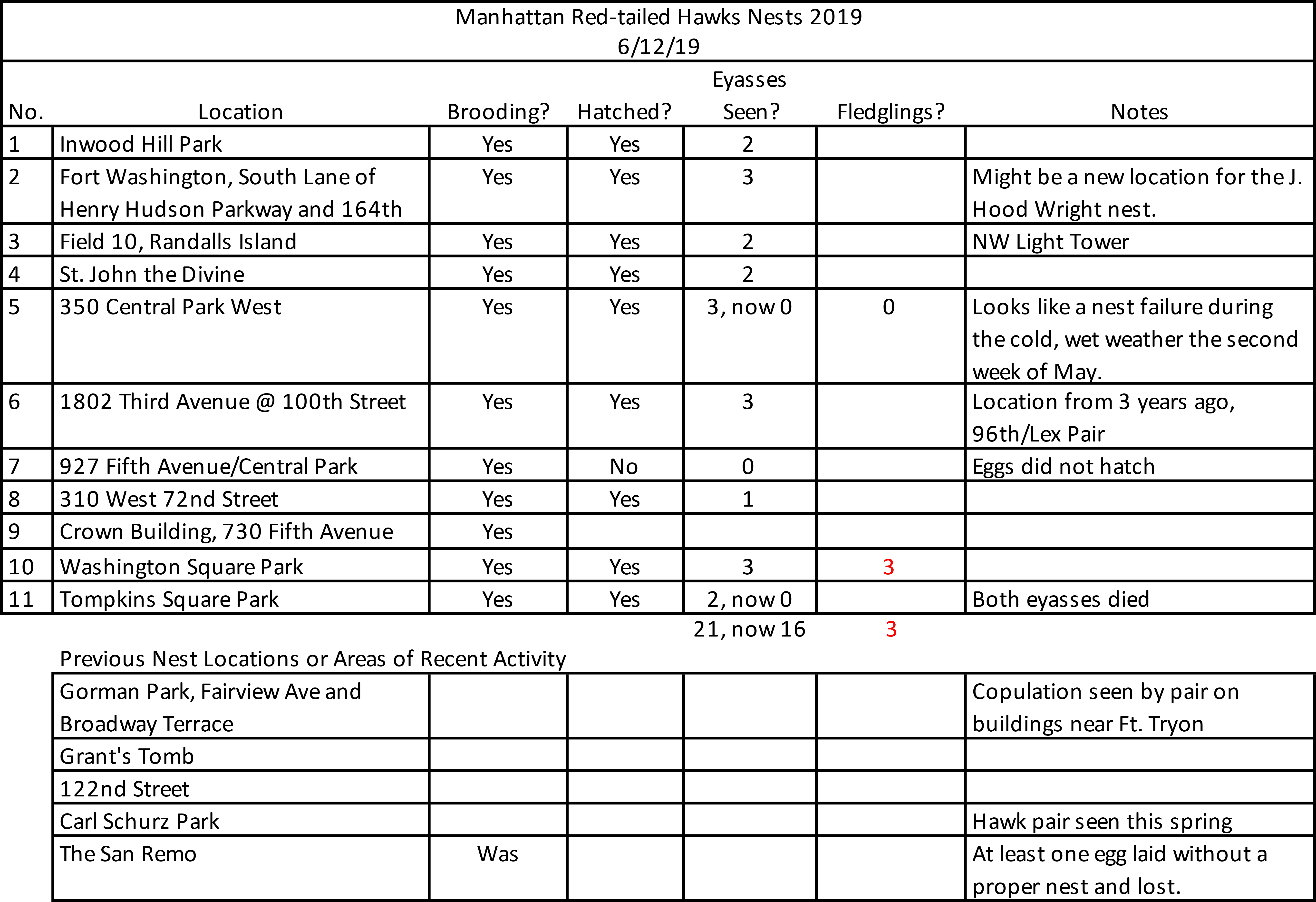
2019 Manhattan Red-tailed Hawk Nest Update 12

Updates on a few nests:

  • One hawk has fledged from the Washington Square Park nest safely to the roof of an NYU dorm.
  • Hawk watchers report a male with a brown striped tail (second year bird) helping hunt at the 100th and Third Avenue nest.  A male was not seen by many observers for a few weeks, and it is suspected that it might be a new mate.
  • The Fort Washington nest has three eyasses.
  • There are concerns about the health of the remaining eyass at Tompkins Square Park.  It seems lethargic at a time it should be very active and getting ready to fledge.
Hawks 2019

Fledge Day!

I love fledge days.  Washington Square Park had an eyass become a fledgling sometime early in on Friday morning.  I slept in, so I don’t know exactly when!  I got down to the nest in the early afternoon.  Thanks to a report from a building engineer, the fledgling was discovered on the roof of the Goddard Building.  It was on set of stairs to an equipment room which has been a favorite spot for fledglings in past years.  It looked great and seems to have made its first trip without any issue.

The two remaining eyasses stayed on the nest but certainly were interested in looking at what was going on “down below”.

What was really interesting is that the new adult male who has been in territory this week, and whom the female has becoming more tolerant of, charged the fledgling in the late afternoon.  Could it be possible that the new male is responding to the fledgling as a competitor rather than a child to help raise? 

(The fledgling was no worse for wear by the way.  The adult male’s behavior reminded me of fledglings who fight over food or sticks.)
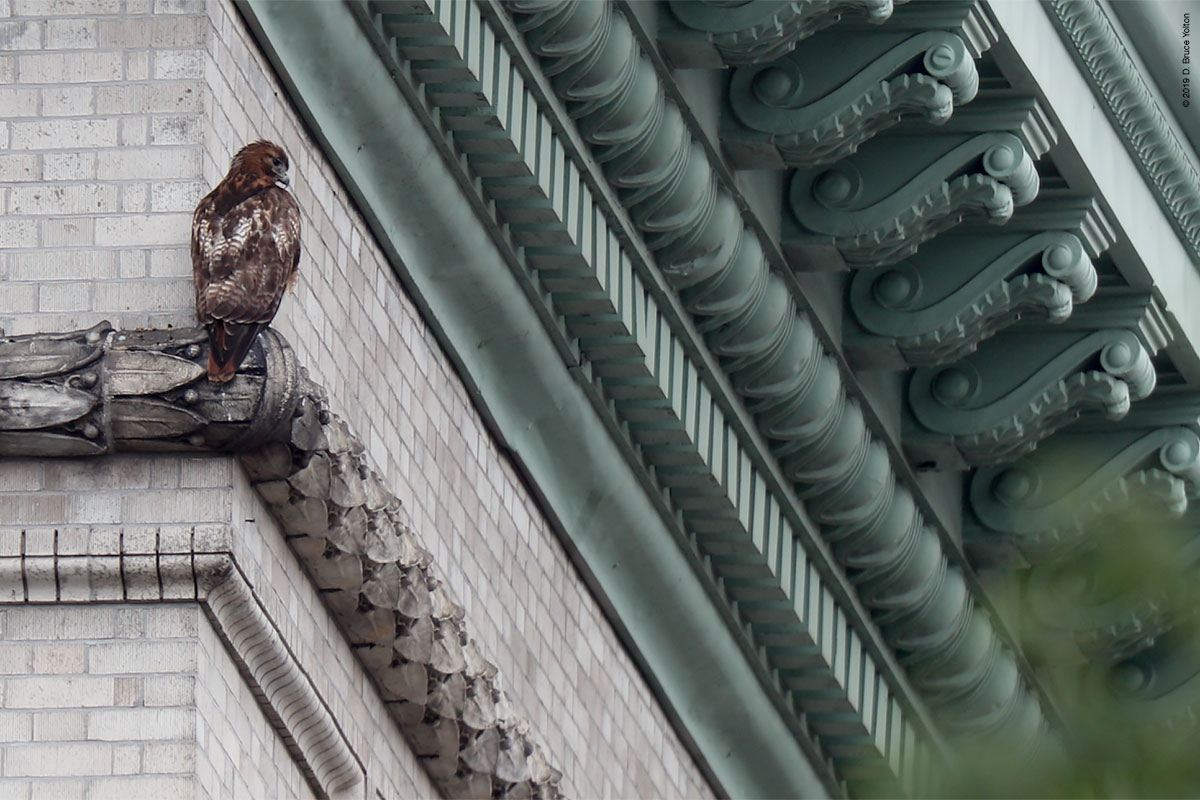
I thought we’d be in for some surprises but this isn’t what I was expecting.  I thought we might see the new male bring food to the fledgling, as a way of bonding with the female on on fledge day.  But instead we saw some aggressive behavior.

I will be interesting to see what happens when the fledgling starts crying for food.  Will this trigger some switch in behavior by the male?

I’m so excited to see how this turns out.  I’m enjoying the front row seat Washington Square Park and the NYU Webcam is giving us to watch hawk behavior.

20190607-WSP-RTHA01
20190607-WSP-RTHA02
20190607-WSP-RTHA03
20190607-WSP-RTHA04
20190607-WSP-RTHA05
20190607-WSP-RTHA06
20190607-WSP-RTHA07
20190607-WSP-RTHA08
20190607-WSP-RTHA09
20190607-WSP-RTHA10
20190607-WSP-RTHA12
20190607-WSP-RTHA13
20190607-WSP-RTHA14
20190607-WSP-RTHA15
20190607-WSP-RTHA16
20190607-WSP-RTHA17
20190607-WSP-RTHA18
20190607-WSP-RTHA19
20190607-WSP-RTHA20
20190607-WSP-RTHA21
20190607-WSP-RTHA22
20190607-WSP-RTHA23
20190607-WSP-RTHA24
20190607-WSP-RTHA25
20190607-WSP-RTHA26
20190607-WSP-RTHA27
20190607-WSP-RTHA28
20190607-WSP-RTHA29
20190607-WSP-RTHA30
20190607-WSP-RTHA31
20190607-WSP-RTHA32
20190607-WSP-RTHA33
20190607-WSP-RTHA34
20190607-WSP-RTHA35
20190607-WSP-RTHA37
20190607-WSP-RTHA38
20190607-WSP-RTHA39
20190607-WSP-RTHA40
20190607-WSP-RTHA41
20190607-WSP-RTHA42
20190607-WSP-RTHA43
20190607-WSP-RTHA44
20190607-WSP-RTHA45
20190607-WSP-RTHA46
20190607-WSP-RTHA47
20190607-WSP-RTHA48
20190607-WSP-RTHA49
20190607-WSP-RTHA50
20190607-WSP-RTHA51
20190607-WSP-RTHA52
20190607-WSP-RTHA53
20190607-WSP-RTHA54
20190607-WSP-RTHA55

Washington Square Park, Day 3 Of Watching The New Male

I spent a few hours in Washington Square Park this afternoon.  The new male was still hanging around and the female was still annoyed by him. He flew around her when she was on the Education Building flag pole and she fluffed up when he came near.  She was near him on One Fifth, but never let him be too close.

(In the pictures, he’s the lighter and smaller adult.)
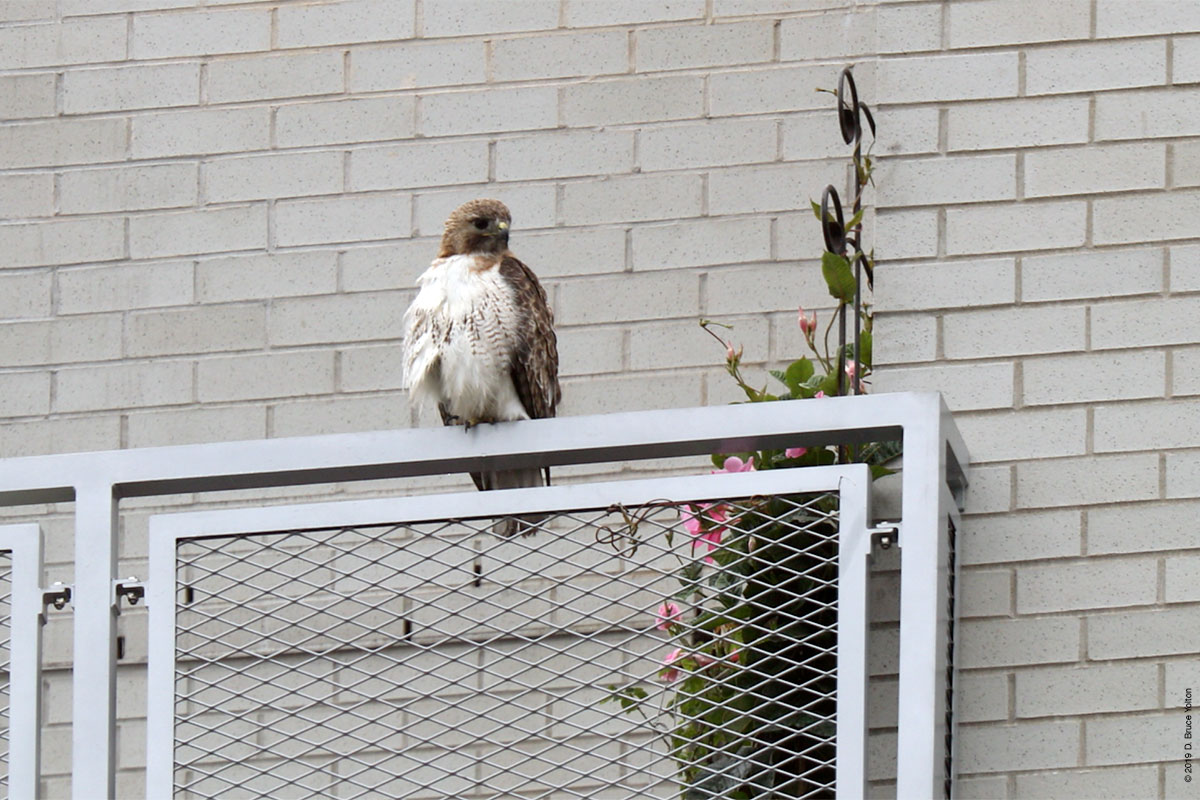
I would caution anyone not to rush to any judgements about this new male hawk.  It isn’t at all clear he is going to be accepted by the female.  I’m surprised that self-appointed experts have already declared the pair bonded and calculated the age of the hawk based on no first hand observations.  It reminds me of the first year for this nest, when “experts” predicted how the fledge was going to occur and got almost everything wrong.

This year, the NYU nest grants us an extraordinary opportunity to watch the behavior of an adult female who has lost her mate while her eyasses were still on the nest.  We have a camera feed to watch and a territory that is fairly easy to monitor.  Let’s do our best to observe something that isn’t in any book.  Let’s stop spending energy waiting to ask questions of an “expert” or rush to conclusions based on our own romantic ideas of love.  And let’s stop generalizing from the limited examples we have with how hawks replace lost mates and applying them to this nest.  If we insist on having answers to our questions prematurely, we then stop observing.  How sad is that!

Each year, nature shows me something about Red-tailed Hawk behavior I had never noticed before or had a chance to watch.  For me this is what is so exciting about watching Red-tailed Hawks.  They keep revealing more and more about themselves to me as I keep watching them.  That’s one of the joys of behavioral science.

20190606-WSP-RTHA01
20190606-WSP-RTHA02
20190606-WSP-RTHA03
20190606-WSP-RTHA04
20190606-WSP-RTHA05
20190606-WSP-RTHA06
20190606-WSP-RTHA07
20190606-WSP-RTHA08
20190606-WSP-RTHA09
20190606-WSP-RTHA10
20190606-WSP-RTHA11
20190606-WSP-RTHA12
20190606-WSP-RTHA13
20190606-WSP-RTHA14
20190606-WSP-RTHA15
20190606-WSP-RTHA16

Tolerated Male Hawk at Washington Square Park

The new adult male in Washington Square Park made visits to a number of buildings on all four sides of the park, including the Education Building, Silver Building, 1 Fifth Avenue (while the adult female was there, he’s on the left), 2 Fifth Avenue, Lipton Hall, Kimmel Center and at dusk the nest briefly.

So, he may end up being Bobby’s replacement. The female didn’t exactly welcome him, but she tolerated him today.

The eyasses look close to fledging.  The first could leave the nest any day now.  One slipped and had to work to to stay on the ledge this afternoon.

It would be great if the male settles in and helps with post-fledging feedings and hunting lessons later in the summer.

20190605-WSP-RTHA01
20190605-WSP-RTHA02
20190605-WSP-RTHA03
20190605-WSP-RTHA04
20190605-WSP-RTHA05
20190605-WSP-RTHA06
20190605-WSP-RTHA07
20190605-WSP-RTHA09
20190605-WSP-RTHA10
20190605-WSP-RTHA11
20190605-WSP-RTHA12
20190605-WSP-RTHA13
20190605-WSP-RTHA14
20190605-WSP-RTHA15
20190605-WSP-RTHA16
20190605-WSP-RTHA17
20190605-WSP-RTHA18
20190605-WSP-RTHA19
20190605-WSP-RTHA20
20190605-WSP-RTHA21
20190605-WSP-RTHA22
20190605-WSP-RTHA24
20190605-WSP-RTHA25
20190605-WSP-RTHA26
20190605-WSP-RTHA27
20190605-WSP-RTHA28
20190605-WSP-RTHA29